
’28 Years Later: The Bone Temple’ Review — This Nightmarish Sequel Gets It Right

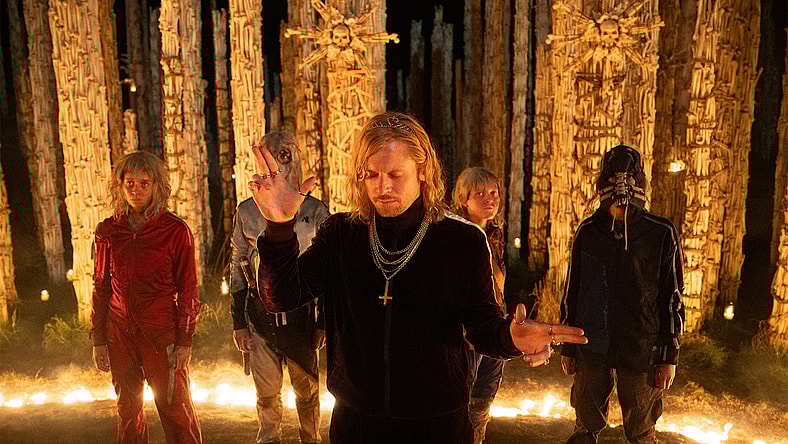
Nia DaCosta’s 28 Years Later: The Bone Temple is an inventively brutal sequel that pushes boundaries to showcase what genre cinema is truly capable of. Better yet, the film’s use of its gut-wrenching violence is both emotionally and philosophically unflinching in its extremeness. It understands brutality not as spectacle alone, but as a way of discussing religious belief systems, power structures, and the cost of survival in a world where ideology has long since cannibalized compassion. And this all comes crafted with confidence by one of our generation’s most important creative voices.
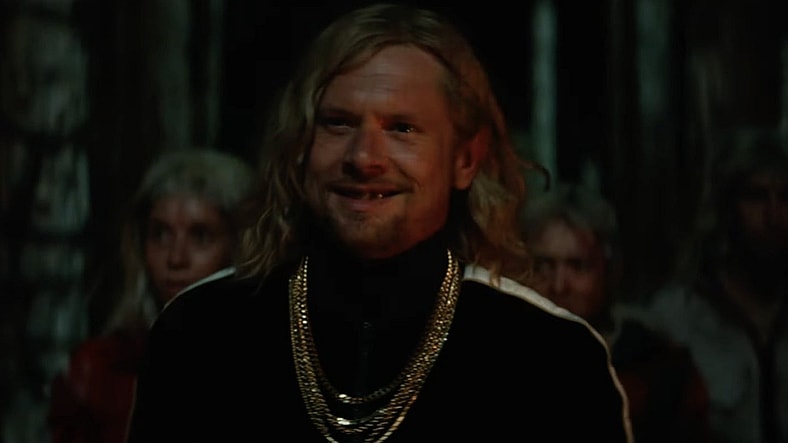
At the film’s center is an extraordinary dual-lead showcase from Jack O’Connell (Sinners) and Ralph Fiennes (28 Years Later), whose performances form the film’s ideological backbone. Their dynamic stages a deeply unsettling face-off between the noble pursuit of knowledge and the grotesque insistence on religious subjugation by way of blind faith. Fiennes’ returning Dr. Ian is mesmerizing in his calm, intellectual certainty—while O’Connell brings you cup-your-mouth-and-point-at-the-screen madness as a man who believes himself righteous even as he orchestrates truly knowable horrors.
But there’s also a tenderness that softens the tension by way of the often delightful relationship between Samson (Chi Lewis-Parry), the infamous Alpha, and Dr. Ian. Their interactions inject unexpected humor, warmth, and fleeting moments of humanity into an otherwise punishing movie, grounding it emotionally and preventing it from fully collapsing into nihilism. These quieter scenes matter a lot because they remind us what’s at stake before the film takes it all away.

But make no mistake: The Bone Temple is savage stuff. It contains some of the most grotesque on-screen violence I’ve encountered in quite some time—and I work for a horror publication, so that assessment comes hard-earned. The sure-to-be infamous “shirt-removal” sequence is genuinely shocking, the kind of scene that makes an entire theater recoil in disbelief and maybe even hold a little bit of brief regret for getting ourselves a ticket. And yet, crucially, every act of brutality feels earned. Each violent beat serves a character, a theme, or even a consequence.
With this sequel to last year’s 28 Years Later, DaCosta firmly canonizes herself as one of the most essential genre filmmakers of her generation. Few directors can step into legacy material with this level of authority, vision, and self-assured control, and even fewer can expand a franchise’s mythology without betraying it. DaCosta does both. Her world-building is massive yet intimate, tactile yet fun as hell. From the sheer genius of the opening location—an abandoned, overgrown indoor water park that feels ripped from a collective nightmare—to the chilling precision etched into the Bone Temple itself, the film’s environments feel lived-in, decayed, and spiritually corrupted.
One of the film’s greatest strengths is Erin Kellyman’s Jimmy Ink, a standout new character who quickly becomes essential to this newly established sequel/trilogy. Kellyman embodies everything The Bone Temple gets right. She brings emphatic emotional gravitas to a world where humanity feels least expected, balancing fearless lunacy with genuine vulnerability. Jimmy is dangerous, unpredictable, and capable of shocking violence … but when she shows young Spike (Alfie Williams) moments of unexpected kindness, it gives the audience the emotional strength we desperately need to keep watching. And when her fury is turned outward, aimed at the monsters who deserve it (human or otherwise), the result is both horrifying and deeply satisfying. Kellyman’s performance is outstanding, and it deserves to be recognized just as much as Fiennes or O’Connell’s.
Then there’s the soon-to-be-legendary musical sequence—an audacious swing that shouldn’t work, yet lands with jaw-dropping impact. Watching Ralph Fiennes’ Dr. Ian finally unleash the dance number he’s seemingly been itching to perform since the 1980s is joyous, chaotic, and completely unhinged. It’s the kind of moment that leaves audiences covering their mouths, pointing at the screen, and laughing in disbelief. Instant water-cooler conversation. The sort of scene fans will never forget.
It’s genuinely unfortunate that The Bone Temple arrives outside the traditional awards-season corridor, because this is career-best work. Fiennes would be more than deserving of serious consideration for his layered, quietly terrifying performance, just as DaCosta should be recognized for her command of tone, world-building, character, and thematic ambition. This is blockbuster filmmaking with brains, guts, and teeth.
This earns a rare five-star rating from me. From its stomach-churning opening to its audacious bridge ending that boldly sets the stage for what comes next, 28 Years Later: The Bone Temple is that rare middle chapter that doesn’t just justify its existence—it threatens to become the defining entry of the entire series.
Summary
Anchored by towering performances and fearless direction, Nia DaCosta’s 28 Year’s Later: The Bone Temple dangles some unexpected humanity within its punishing terror and nightmarish violence.