
‘Sleep Stalker’ Cinematographer Jeffy Can on Crafting Found Footage Fear

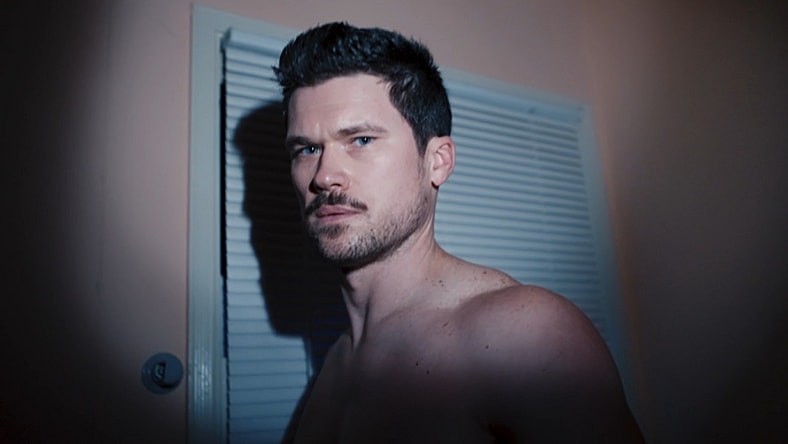
Found footage horror lives or dies on authenticity—and Sleep Stalker cinematographer Jeffy Can knows exactly how to make the camera feel like a character. Drawing on his past experiences working with real-life DIY YouTubers, Jeffy helped transform a sunny influencer world into a claustrophobic nightmare. Every awkward silence, off-kilter frame, and seemingly unplanned camera movement was carefully orchestrated to make viewers feel uneasy and question whether what they were seeing is real.
In the conversation below, Jeffy reveals how he and Sleep Stalker directors Justin Shilton and Rob Zazzali fused influencer aesthetics with paranormal chills—and discusses his other new horror project, Sundown, which is currently making the film festival rounds.
The film’s full synopsis reads: An influencer couple buys an old home to remodel for their DIY social media channel, but when the husband’s sleepwalking turns violent, they’re forced to investigate his psychological past and the home’s dark history.
Dread Central: How did you first become involved with Sleep Stalker? What initially drew you to the project?
Jeffy Can: I thought it was conceptually really intriguing. There are a ton of found footage horrors out there, but I found this to be well motivated and very relevant. I had actually worked with a DIY YouTube couple in the past as well, and their lives were like a fantasy come true. Something about playing out a completely alternative reality where things went terribly wrong instead was very enticing.
DC: Sleep Stalker is a found footage horror film. Did you watch any similar films, such as Paranormal Activity or The Blair Witch Project, to get inspiration before shooting commenced?
JC: I saw both of them in theaters when they were released and really enjoyed them at the time. I decided not to rewatch them prior to this, as I didn’t want to pull too much visual influence right before shooting.
DC: How did you collaborate with directors Justin Shilton and Rob Zazzali on defining the visual language of the footage—especially across influencer content, sleep institute scenes, and paranormal investigation sequences?
JC: Justin and Rob were great collaborators. They really trusted my instincts, and I trusted theirs. There were some initial concepts of what cameras were going to be used and how they would be operated, which would have involved the actors self-taping using camcorders and iPhones. But after some initial camera tests, we were all pretty unhappy with the footage, so we instead developed a camera design with an A7siii, which I think is fairly common amongst creators nowadays.
But the trick was to have me operate most of the time so that the actors could focus on the performance. There was a mix of choreographing the camera movement and developing a language with the actors so that we could be in sync and communicate without speaking during takes. For example, we had a cue to signify when Josh or Gabrielle was ready to flip the camera back to selfie mode (I would flip around) and then vice versa. We also had to coordinate hand-offs for moments that I couldn’t physically be there.
For example, there’s a moment where Gabby turns into the mirror when Shane flashes by. I’m operating right over her shoulder, I pass it off to her and duck down as she turns into the mirror, and the hand off happens again when she turns back. We were worried about the fluidity of this at first, but in the end, I think the illusion that they are indeed filming themselves comes across pretty well.

DC: What was the most challenging scene in Sleep Stalker? How did you solve it, given the constraints of found footage and indie budget?
JC: Some of the stunts were challenging. With the limited budget and crew, we had to work with minimal lighting, and that became difficult when we had someone in a green suit pulling sheets and slamming doors, while still trying to maintain a certain aesthetic. After all, while we wanted to feel like this was all “natural light,” every scene did involve some amount of lighting, sometimes just a single unit, but sometimes it became pretty involved. Trying to light the scene so we can see the action enough, but also not create greenman shadows when you don’t have a gaffer or grip was difficult. But we managed by really planning the blocking in conjunction with the lighting and identifying the simplest, most efficient, and safest approach.
DC: How do you plan a scare in a found footage film, where everything is supposed to feel unplanned?
JC: We often had to place ourselves in a vlogger’s point of view, and consider what someone would be doing when self-taping, and what would cause them to lower the camera for a moment or set the camera down completely. We designed moments where one of the actors would get distracted and quickly put the camera down, leaving it rolling – and this would essentially give us a lock off so that we could paint out monofilament or whatever we were using to initiate a gag. Other tactics like switching to Sony lenses with autofocus so we could utilize the misbehaving focus hunting to build scare moments.
DC: Can you tell us something about your work on Sleep Stalker that we might not know?
JC: I think the biggest thing was just that I was there operating for most of the film. I felt like the illusion worked well, and it seems like initial reviews of the film buy it. So while we didn’t necessarily craft the most “cinematic” images by certain standards, I feel we successfully pulled off the trick we desired, which was to allow the actors to focus on their own performances while still making it feel like they were taping themselves. Which ultimately serves the story of this film, so I think that’s a success.
DC: You also have a horror short film, Sundown, that is currently making the festival rounds at places like the LA Latino International Film Fest and HollyShorts. Can you talk about your work on the project?
JC: Yes, Sundown was a fun project. Our inspiration was a mix of Texas Chain Saw and Get Out. It was driven by racial themes, and we also like the idea of giving it a classic horror/slasher aesthetic. We shot on Zeiss Super Speeds with RED Komodo, and we really tested out some film emulsions and played with some of the RGB lighting and LUTs we used. One nice element to play with was the love story within this horror short; it motivated a really nice dynamic against the slasher portion. It helped inform when to be on a gimbal/dolly against handheld as well as the color tones that shift throughout the short.

DC: How was working on Sundown different than Sleep Stalker?
JC: Just two entirely different beasts, one is meant to be a lo-fi vlogger’s found footage, and the other sort of modern take on a classic horror slasher. The approach is entirely different, and both present their own challenges. But ultimately, they were both amazing projects to work on because they had a strong vision from the jump, and had clear aesthetic choices that created boundaries to work in. I think as a filmmaker, there’s nothing more satisfying than fulfilling a vision. To some degree, having big budgets, shooting on nice glass, and huge lighting setups, it’s kind of every cinematographer’s dream. But ultimately, if the film doesn’t have a strong vision, it becomes eye candy and isn’t as gratifying in the same way. Don’t get me wrong, though, I definitely love some eye candy.
DC: How do you feel that horror cinematography has changed over the years?
JC: I think horror is one of the most interesting to see evolve from a cinematography point of view. It’s often one of the most stylized and tends to get the most permission to be so sensory. From early film history, it was very gothic and stark, and even into the noir era. Then I think classics like Halloween and Texas Chain Saw started to really give you some grit and mood. But honestly, Kubrick set the stage for some elevated cinematic horror goodness. Some of my favorite films in the modern era are horror/horror adjacent from the likes of Fincher, del Toro, Eggers—obviously top-notch, slick filmmakers. But then you also have room for some truly bizarre stuff like Under the Skin, Lux Aeterna, and Skinamarink. Honestly, if you’re a fan of cinematography, you have to have an appreciation for the genre.
DC: Are you personally a horror fan? If so, what are some of your favorites? Is there another type of horror film you would like to work on one day?
JC: Yes, absolutely. I think my previous answer says it all. My favorites are definitely many of Kubrick’s works, like The Shining and 2001. But a lot of 90’s films I really hold dear, like The Silence of the Lambs, Se7en, Audition, and The Sixth Sense. There are plenty of horror movies I love from all over, but that era really resonates for me. Maybe it’s correlated with my youth and discovery of cinema, or maybe those films are just damn awesome. I think if there’s any genre I could work in, it would be sci-fi horror. Something like 2001, Ex Machina, or Sunshine would be a total dream.
Sleep Stalker is available now on VOD.
Categorized:Interviews