
Your Next Favorite Horror Director Just Might Be a YouTuber


I’ve been on the Internet long enough to tell you that the first YouTube video I ever watched was “Charlie the Unicorn,” an animated short about a group of unicorns who venture to Candy Mountain, only for Charlie to have his kidney harvested in the end. From there, I discovered lonelygirl15 the gory and genuinely shocking series “Happy Tree Friends,” and when I tired of those, I began searching for other things like “real ghosts caught on camera” and “alien abductions,” certain I’d find something more disturbing than anything I could find in the movie theaters or on TV.
Ever since its launch in 2005, YouTube has been called the future of entertainment, with some (correctly) predicting that it would replace television. But no one could really predict that the video-sharing platform would ultimately create entirely new forms of content (ASMR videos, celebrity interviews over hot wings and chicken tenders, longform video essays), and nobody would have expected that some of the most interesting new voices in horror would come from it either.
The fact that we’re seeing so many horror movies written and directed by YouTubers shouldn’t come as that much of a surprise. Horror has always welcomed the kind of talent you wouldn’t necessarily find in film school–amateur filmmakers working with limited resources or zero prior experience, shoestring budgets, people willing to push boundaries and get really weird–which is how we got gems like The Evil Dead, The Blair Witch Project, and the Paranormal Activity franchise. But now, instead of discovering this talent at a film festival or through a friend of a friend in the industry, we’re finding it online.
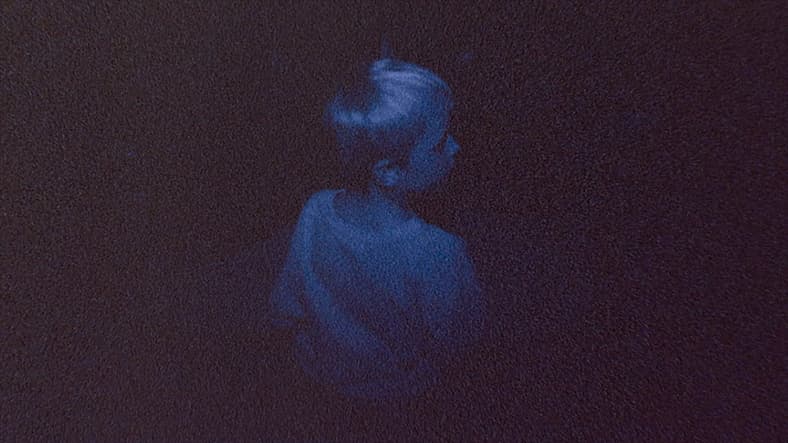
Before Skinamarink became one of the most divisive horror hits of the 2020s, its director, Kyle Edward Ball, got his start on YouTube, uploading videos inspired by descriptions of his viewers’ nightmares. The success of the series, which he called Bitesized Nightmares, eventually led him to create a viral 30-minute proof of concept called Heck, which eventually became Skinamarink.
This was around the time the concept of “backrooms” was becoming popular online. As I wrote in my explainer in March, the backrooms started with “an anonymous 4chan user…asking users to ‘post disquieting images that just feel ‘off’.” One of those images, a photo taken on an accidental Dutch angle in what looks like an abandoned office space covered in chevron wallpaper, would go on to inspire a then 16-year-old Kane Parsons to upload his viral video, “The Backrooms (Found Footage)” to YouTube in 2022. Only a year later, A24 would announce that they’d be working with Parsons on a feature-length film version, premiering this May.
I could go on to name every single filmmaker who got their start on YouTube–Markiplier, whose highly–anticipated adaptation of the indie video game Iron Lung grossed over $50 million in theaters earlier this year, comes to mind, as well as movie critic turned writer-director Chris Stuckmann, RackaRacka’s Danny and Michael Philippou, and of course, Curry Barker, whose film Obsession is also coming to theaters later this month–but that doesn’t explain why YouTube seems to be shaping itself into such an effective incubator for horror talent.
After it was announced that YouTuber Dylan Clark had been tapped to direct the Blair Witch Project remake, the reaction on X was immediate and, at times, skeptical. Could someone who got their start uploading short films to YouTube really be trusted with a major studio-backed film? And more broadly speaking, could YouTubers be trusted with horror at all, let alone something as beloved as The Blair Witch Project?
The concern isn’t entirely unfounded. Making a viral video and sustaining dread across a 90-plus-minute runtime are two very different skills, and just because you have a popular YouTube channel doesn’t necessarily mean you have a distinct vision or style (unfortunately, this is the case with Stuckmann). But most creators know how to tell an engaging story and hold a viewer’s attention. Just look at the Philippou brothers and their instinctive understanding of storytelling and pacing.
YouTube also collapses the distance between creators and their audiences. Filmmakers like Ball were responding directly to viewers with their work, learning which images and ideas stick and which ones fall flat. In the case of “The Backrooms (Found Footage)”, Parsons was able to take a relatively new piece of internet folklore created and shaped by (mostly) anonymous users and turn it into something legitimate.

Of course, name recognition doesn’t hurt either. I’d argue that Iron Lung wouldn’t have been as successful as it was if it wasn’t for Markiplier being one of the most popular and influential YouTubers of all time. Kids know who he is, their parents likely know who he is, millennials who have been on the Internet as long as I have know who he is. But the general audience doesn’t have to be familiar with a filmmaker like Barker, for example, to consider watching Obsession. The film can sell itself on its own.
With this in mind, it’s really no surprise that YouTubers are becoming what some are calling the future of horror. I’m personally very excited to see what is in store for all these filmmakers, as well the ones who haven’t gone viral or been noticed by a studio yet. If YouTube can give us gems like Talk to Me and Skinamarink, who knows what will come out of it next.
Categorized:Editorials