
How Horror Saved 2025 (and Me)

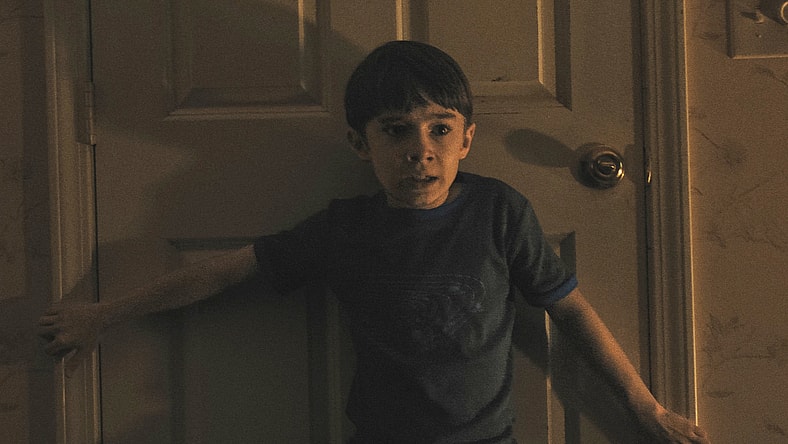
Since I started my tenure here at Dread Central, shifting from occasional contributor to Staff Writer to Associate Editor now (yay, me), I’ve endeavored to take all the disparate horror releases of the year and tether them to some kind of broader, overarching theme. In 2020, of course, that theme was hope. Last year, I interrogated just how angry the horror genre was feeling, with most indie and theatrical releases refracting our contentious, tenuous sociopolitical state. This year was a bit more challenging, though, and as the year came to an end, the immaterial ghost of Descartes possessed me, and 2025’s horror, really, was about the self.
Not just the self as it pertains to me—though I ask that the following egocentrism not deter you—but the self as it pertains to us all. Who we are. What we think. What we want to do and be and actualize. And, perhaps, most importantly, what really, truly, scares us. My body and my mind scare me more than anything, and 2025’s horror scene was eerily prescient of where I’d been and where I’d be going.

A Bad Year
Back in August, I wrote about Zach Cregger’s Weapons (my favorite horror movie of the year) and how it “almost killed me.” The social reaction was understandably incredulous, Billy Loomis-coded—movies don’t kill people. What follows will touch on my own mental health struggles, including but not limited to attempted deaths by suicide, so please redirect yourself (go watch Dead End, maybe) if that might prove to be too much.
In November of 2020, I attempted to die by suicide. I was hospitalized, treated, and for several years, figured the worst of it was behind me. That was 25 years of compartmentalization and buried stress and anguish rearing its ugly head all at once, but I was stabilized—I had a routine. A treatment plan. Everything would be okay. You can read about how Final Destination 2, of all things, helped me through that.
In August of 2024, those feelings reemerged, seemingly out of nowhere (though that’s never really the case). Alongside my clinical depression diagnosis, my August hospitalization added a panic disorder into the mix, and I’ve since been managing the severe lows of depression alongside the sheer panic of, well, a panic disorder. The kind where I hyperventilate and pass out at hibachi (or Weapons…).

A Shifting Genre Landscape
2024 was a bad end to what would prove, at least in terms of my mental health, to be the start of another very bad, very challenging, no good year. The panic morphed into nihilism, this kind of detachment from enjoyment, and I wandered aimlessly through acclaimed releases like Dangerous Animals, Companion, and Drop, mostly unmoved. Friends and family branded me a hater (in jest… I hope), incredulous that the horror guy was so disappointed with, well, the horror. But I was. Deeply. And I didn’t know why.
Some of it was contextual, independent of me and my sense of self. Media criticism is in a tenuous place; the arts are even more so. I was scared going into Sinners, not because I was afraid of vampires, but because I was fearful of how much longer filmmakers like Ryan Coogler would have access to the kinds of capital needed to make movies like that. Which then, by extension, dissected my own actualized self. Without horror, there is no criticism, and without criticism, who even am I?

That pessimism and hopelessness, augmented by a diagnosis, made it more than hard to simply sit down in an auditorium and have a good time. I hated seeing death and misery. Horror had always been cathartic for me, yet now, I was triggered and angry and upset. I didn’t want to see my own insecurities and fears reflected at me. It was hard enough to manage without the genre I loved forcing me to reconcile with the grim reality of the world on a semi-regular basis.
It took me a few months, but Weapons is where it really clicked for me. What the hell was I doing? Who the hell even was I? Why was I seeking escapism and inoculation when, really, I should be confronting the fears that plague me most? Yeah, Together was icky, but its depiction of a relationship on the brink scared the ever-living-shit out of me. In July, I loathed the movie for making me feel that way. But… I needed to? I think I did, yeah. What I needed to do was confront that, tackle that, reconcile with it, and even concede to leave it a mess of feelings I didn’t fully understand, but nonetheless validated and recognized as a part of myself.

The Black Dog
Dr. Samuel Johnson (inventor of the English Dictionary) was the first person credited with the term “black dog” to describe melancholy (at the time), and later depression. The metaphor largely conceptualizes how depression, once experienced, never quite goes away. Even in those moments of bliss, the lumbering black shadow of the dog remains along the periphery. The shadow, as all shadows do, distorts. Distorts your life, your sense of self, and your ideals and values. And you can’t Old Yeller the dog, either. It’s always going to be there.
The black dog followed me into 28 Years Later, and it’s why I sobbed, spiraling into a week-long depression, so physically, innately aware that my own mother was one day going to die. The black dog was there when I saw Bring Her Back, and I envisioned a life of loneliness, however irrational, where I might be compelled to hurt those around me for my own preservation, no matter how fleeting. It was there during I Know What You Did Last Summer, of all things. I wasn’t a teenager anymore. I was an adult. It scared me.
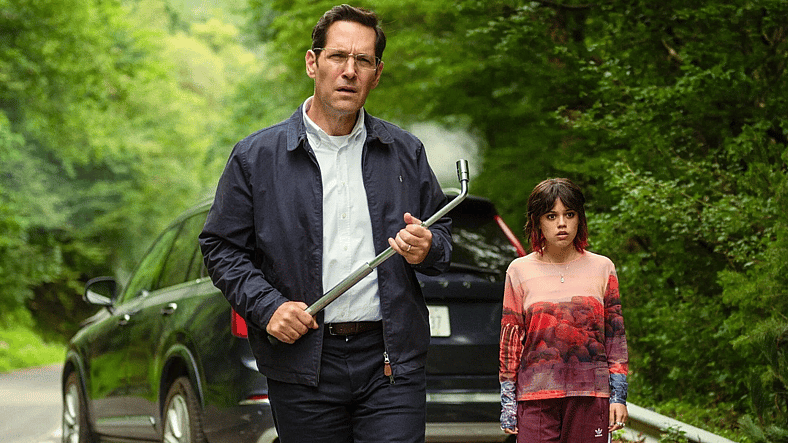
Yet, to return to Weapons—the most visceral screening of all in 2025—it was a slow and steady year of actualization, realization, understanding—whatever you want to call it. I’m not the same person I was five years ago. Not even two years ago, when I remarked on how hopeful the horror genre in 2023 had been. I’m sadder, more exhausted, more anxious and scared. Yet, for the better part of the year, I’d been pretending I wasn’t. I was myopic, viewing horror as I always had, but not as I should be now, as the person I am now.
Our relationship with media changes over time, inclined as we are to resist it. We get older, our bodies break down, and our minds get a little looser, have a harder time holding onto things and making sense of them. For me, at least, I needed to recognize that, really, really recognize that. And beyond recognition, I needed to internalize that and believe it. In my very soul, or core, or whatever little bubble of me exists at the center of it all.
I saw Death of a Unicorn really late in the year, months after critics and audiences tore it apart. And guess what? I liked it. It’s a long, painful road ahead, but I know myself just that much better. And, in the most profound, beautiful way, I understand my favorite genre more. Not in the way I always had, and not in the way I thought I was supposed to. But in a way that feels uniquely mine and mine alone. My sincere hope as the year comes to an end is that you feel the same, however small that might be. We’re all getting older, and we’re all changing. It’s nice when we can accept that the horror genre does too.
Categorized:Editorials