
In Retrospect: ‘It: Welcome to Derry’s’ Excess Was Part of Its Charm

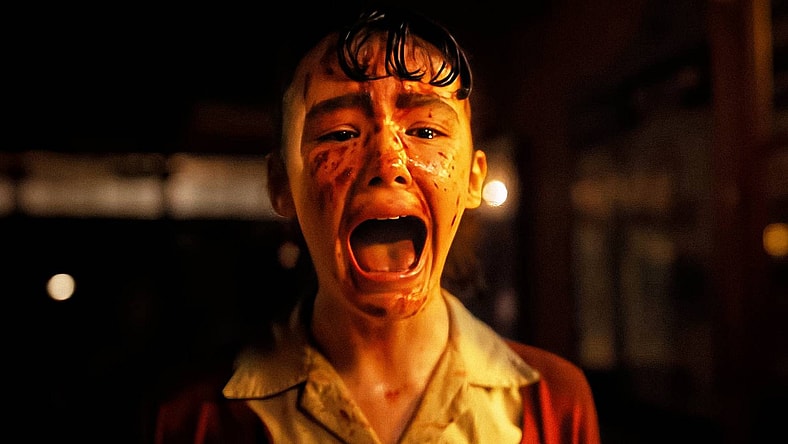
Horror’s been in a bit of a rough spot lately. I don’t mean in terms of quality—there have been some certified bangers these past few years—but in terms of mood, the genre’s emotional state of being. Check in on your favorite genre. Something tells me horror is back on Tumblr, Sad Girl posting to an audience of millions. It’s certainly helped propel this year’s biggest releases to massive box office success, but it’s simultaneously left me drained in a world that already feels like a horror movie.

I think it goes back to Jennifer Kent’s The Babadook, or maybe the early films of Robert Eggers. Since then, horror has been preeminently occupied with trauma and Big Feelings. Everything from Halloween to even Smile 2 gets deep in the muck of the seriousness of it all. And, yeah, the world feels really scary, but something like Re-Animator can be just as politically probing as, say, 28 Years Later. That’s why, contrary to the broad critical reception, I really vibed with Andy Muschietti’s (alongside Barbara Muschietti and Jason Fuchs) It: Welcome to Derry. It’s big, it’s fun, and it’s refreshingly self-aware.
In our review of the series, writer Kaiya Shunyata wrote, “In certain instances, the horror aspects of the show are so amateur, they feel like part of a Goosebumps episode. Like these sequences, the show’s score is just as grating. The bass reverberates through each scene like a foghorn designed to penetrate your brain so severely that you forget what you’re watching is an unending mess.” I think that’s a fair perspective, and it’s largely where audiences and critics have landed. It’s more It, dialed up to 27. For a duology that was already past its breaking point, that excess just seems absurd.

Yet, in a year where Weapons almost knocked me out cold, where 28 Years Later had me sobbing, telling my mom how much I loved her, I’m down for a “winged demon-baby that comes flying out of the screen and proceeds to lay carnage.” The aforementioned monster looks so ridiculous, so obviously fake, I couldn’t help but squeal in delight as it proceeded to tear through Derry’s youth in the local cineplex.
Now, in fairness, Muschietti’s pair of films weren’t a success because of winged demon babies (unfortunately, none were present). More specifically, it wasn’t the Woman in the Painting, or the famed leper chasing after poor Eddie Kasprak. While some of those effects were rendered practically, they were still almost cosmically fake, conspicuous filmmaking machinations whose scares were neutered from the start. It, and It: Chapter 2 by extension, succeeded because of serendipitous timing and the legacy of the IP. That the young Losers Club was uniformly excellent was a bonus, so much so, they were digitally de-aged to feature in the sequel (where they otherwise didn’t belong).

This televised version of Derry is still pretty somber, though it bears its traumatic fangs in the silliest way imaginable. A second episode scare featuring some gnarly in-utero horror goes overboard with some chomping, toothy female anatomy. I imagine that lost most viewers. For me, I was screaming, “More, more, more.” The intrinsic, urgent politics of Derry, Maine, are no less potent as a result, either. If anything, I feel more connected to and unnerved by the cruelty, the ambivalence, the sexism, and the racism because of how Grand Guignol Pennywise’s many tricks are.
After all, in a retrospective I penned on the widely maligned It: Chapter 2 (which is what Welcome to Derry feels most similar to), I wrote, “The incredulously mythic scale, the bloated, nearly three-hour runtime. Brazenness isn’t enough for a movie to work, but there’s still an innate value in a movie going all in, especially a horror movie. Yes, teasing terror is more disorienting and haunting, and Chapter 2 won’t instill any nightmares. But sometimes it’s nice for a horror movie to put the entire cosmic kitchen sink on-screen for the audience to relish in.” It’s horror as excess. And in a world so conspicuously, over-the-top scary, I think that works. Come on. The White House is constructing a gilded ballroom. Are pickle jars full of dismembered body parts that big of a stretch? I don’t think so. Neither are monstrous lampshades rolling around like Katamari Damacy.

This isn’t to suggest the naysayers are wrong. Muschietti has a pretty rigid lane in which he’s guiding his iteration of Pennywise. Subtle, nuanced haunts, and the sort are off the table. It’s going to be big, loud, gruesome, and chock-full of tenuously conceived digital monsters. From an objective, unbiased perspective, that’s not very good, and the critical reception reflects that. But as noted, we interrogate and unpack horror differently, and as the year comes to a close, I’d rather contend with the trauma of pickled zombies than anything else.
In a year this heavy, the buoyancy of Derry’s horror feels like coffee after dinner. It’s refreshing, and it makes the rest of it go down so much easier. I’ve been enjoying it. While I might be in the minority, I think a little fluff alongside the main course is perfectly okay. It: Welcome to Derry scratches a very specific itch. The more CGI, the more excess it piles on, the better. At least for me.
If you’ve been vibin’ with the sheer excess of It: Welcome to Derry, I want to hear about it. What kind of monstrosities do you hope to see next season? More importantly, does a horror series need to be conventionally scary to really make an impact? Sound off over on Twitter @Chadiscollins. And while you’re there, send me your best mutant baby memes. I’ve been loving the ones I’ve seen thus far. Let’s all float together.
Categorized:Editorials