
This Gritty and Unnerving Film Is the Best Horror Remake of the ‘90s


Years before horror remakes began to litter multiplexes, Martin Scorsese set the tone for exactly what a redux should do via his impressive reinterpretation of the 1962 film noir Cape Fear. Screenwriter Wesley Strick modernizes the narrative (circa the 90s) and changes up some of the details to differentiate the film from its predecessor as well as to create greater moral ambiguity. Scorsese uses a variety of cinematic techniques to manufacture tension and keep the audience ill at ease throughout. What results is the single-greatest horror remake of the ‘90s. Full stop.
The Cape Fear redux follows defense attorney Sam Bowden (Nick Nolte) as he crosses paths with former client Max Cady (Robert De Niro) after Cady is released on parole. We eventually learn that Sam suppressed crucial information during Cady’s trial and that his deliberate act of deception likely resulted in a longer sentence for the penitent. Following his release, Cady reenters the free world with a newfound legal expertise thanks to years of poring over law books while incarcerated. Emboldened with a misguided sense of justice, Cady sets out to exact revenge against Sam by any means necessary. Though Sam tries to take the path of least resistance, he must ultimately meet Cady on his level if he has any hope of defeating him.
Also Read: Forget the Clowns—Here Are the 10 Scariest Killer Scarecrows in Horror History
The film appropriately opens with a shot of an eagle, effectively foreshadowing the predatory dynamic that subsequently plays out with Cady as the aggressor. However, it’s not as cut and dried as all that. There is an obvious hero and an obvious villain, yet Strick’s screenplay blurs the lines. Sam isn’t the morally upstanding protagonist he’s depicted as in the original. Unlike the screen counterpart by which his character is inspired, Sam isn’t squeaky clean. He neglected his legal obligation to help his client mount the best possible defense. So, where the original is completely black and white in its depictions of right and wrong, there’s a lot more nuance at play here.
Sam’s moral ambiguity is further compounded by his status as a known philanderer. We ultimately learn of at least one prior extramarital affair, and we catch up with him as he’s on the cusp of embarking on another. Though he isn’t nearly as monstrous as the film’s true antagonist, Sam isn’t a great guy, either. He’s a very flawed character, which speaks to the distinction that few people are entirely good or entirely evil and gives the audience food for thought, rather than spelling everything out.
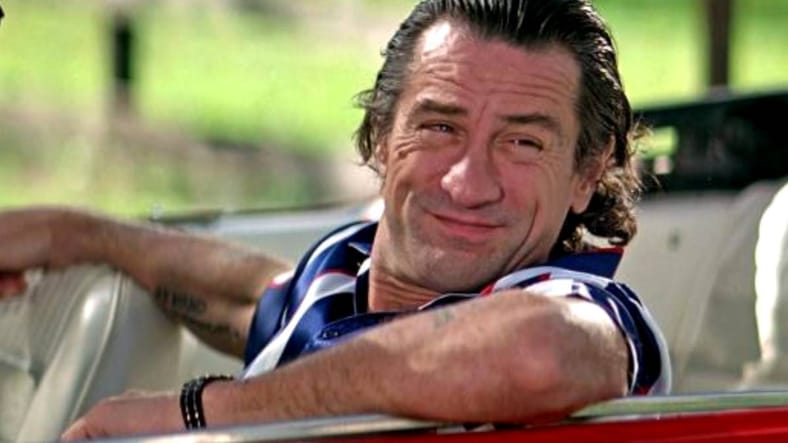
That moral ambiguity is echoed when we see Cady humanized on some level. He’s a monster, for sure. However, I almost find myself empathizing with Cady’s anger at being betrayed by the one person who should have had his best interests at heart. That does nothing to justify any of Cady’s actions, past or present, but it makes for a more nuanced portrayal than if the line between good and evil were more clearly defined.
Also Read: 6 Blood-Curdling Horror Movies Streaming Free This August on Fawesome
The moral ambiguity within Cape Fear goes a long way toward separating this gritty remake from its predecessor. Both are highly effective in their own right, but exploring different themes and expanding from black and white into shades of grey allows for the redux to exist as its own entity, rather than a shameless rehash with nothing to say.
Not only does Scorsese’s take on the material have plenty to say, but it’s also a master class in tension-building. The film established a sense of unease from the beginning. We come upon the Bowden family as they’re already faced with a number of challenges that have nothing to do with Cady. Case in point: Sam has a contentious dynamic with his spouse, Leigh (Jessica Lange) and the two regularly compete in shouting matches. We even see them get physical with each other.
With that type of baseline established for the core characters, there’s no perfect life to interrupt. These are people deeply embroiled in turmoil who don’t have the benefit of starting from a place of stability before their lives are turned upside down. That approach works really well to ensure the tension is sustained for the long haul, as well as creating a more nuanced portrayal of domestic life.
Also Read: 5 Horror Movies That Prove Babysitters Need To Unionize
Scorsese does plenty to augment the tension inherent to the script from a technical standpoint. For starters, he subjects the viewer to long, uninterrupted takes that linger far past the point of comfort. He uses these shots to create a sense of immersion, pulling the audience into the narrative, forcing us to confront the tumultuous waters head-on. In eschewing cuts for as long as possible, he ensures we stay present throughout each harrowing scene.
Aside from long takes, Scorsese also utilizes split diopter shots to further augment the tension in Cape Fear. In one memorable scene, he uses the technique to force us to look at both Leigh and Sam at the same time from different depths while they’re actively bickering. Normally, in such a setup, one character would be is in focus and one out. However, split diopter shots allow two focal points within the same frame. In this case, Scorsese uses that to augment the tension inherent to an uncomfortable bout of marital strife, making us exist in a tense exchange with no way to avert our gaze. He also memorably utilizes the technique in one of the scenes where Cady is spying on the Bowden family, again instilling an underlying sense of unease.
Also Read: ‘Vampire in Brooklyn’ is Better Than You Remember [Run It Back Review]
Between Scorsese’s camerawork and Strick’s screenplay, Cady plays out like an almost supernatural villain. Though it’s never explicitly explained how he does what he does, we learn that he has the ability to move in and out of the Bowden home undetected. Not only that, he knows personal details about each family member, which allows him to effortlessly manipulate each of them at his whim. The absence of context regarding how he does what he does allows our minds to run wild. That’s an effective tactic and one that we see in a lot of great horror movies. We often have no clue what it is that powers the seemingly invincible antagonist, and that makes them all the more off-putting.
On the whole, a strong script, deft direction, and blurred lines between good and evil make this a reimagining that more than justifies its existence. In fact, Cape Fear is by and large the greatest horror remake of the ‘90s.
Categorized:Editorials