
‘Crooks’: Hyper-Stylized Crime Caper Doles Out Death, Danger & Destruction [Tribeca Review]

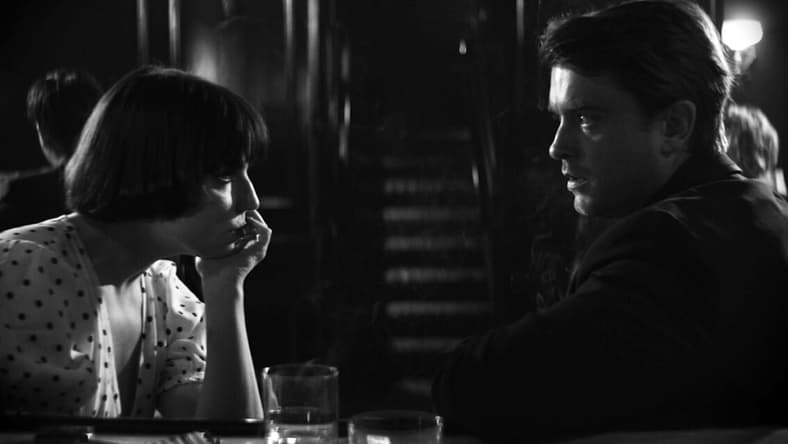
Right from the first frame, Mickey Keating’s Crooks makes it very clear that this is not some run-of-the-mill crime story. It’s a dreamlike experience that operates at extremes and achieves a lost-in-time, grindhouse crime caper aesthetic that’s incredibly compelling. Crooks taps into pulpy, hard-boiled film noir territory and then pushes it to an absurdist apex. It’s a world in which betrayed characters are getting stabbed in the back the moment they turn around. Crooks is a love letter to a lost style of filmmaking that’s an exhilarating return to form for Mickey Keating and one of 2026’s most audacious movies
Mickey Keating is a fascinating filmmaker who has always felt like he’s on the cusp of breaking into the mainstream. His voice and diverse genre penetration skills have continually evolved across movies like Darling, Carnage Park, and Psychopaths. Crooks, Keating’s eighth feature film, synthesizes some of the slickest tricks from his filmography as he immerses the audience in a crime-soaked city that makes Grand Theft Auto’s Vice City seem tame in comparison. Faye (Angela Trimbur) is an outlaw whose attempts to turn over a new leaf as a lounge club singer fall short when her checkered past catches up with her, and she’s pulled back into a harrowing heist.
Keating conjures an expressive, ultra-stylized pulp-genre tale that alternates between black-and-white flashbacks and heightened, saturated exaggerations in the present. It’s a hyperbolized style that’s consistent with Keating’s past genre works and, more than anything, reflects that Crooks is made by someone who just deeply, passionately loves film and wants to celebrate its magic artistry as often as possible, even if that’s every single second. Crooks really taps into what feels like a cross between gritty Don Siegel films and Robert Rodriguez pastiche.
Crooks could have easily been an installment in Grindhouse, and it showcases visuals that feel very in line with Sin City, yet more rooted in the real world, even if it’s still radically over-the-top. It’s an important detail that helps Crooks‘ story have weight and not just float away as some frivolous crime fantasy that’s been ripped out of a ’50s comic. It’s a film that’s very indebted to the past, yet pushes post-modern modernity at every turn. After Faye fires the umpteenth bullet into another random person’s head, it’s hard not to view all this as an absurdist parody of a genre that’s struggling to survive.
Crooks is a crime thriller noir first and foremost, but there are still moments that go all in on horror. There are some genuinely frightening scenes where Keating channels his honed horror instincts. There’s one extended sequence in a diner where a near-feral Melora Walters has a mental breakdown that feels like Crooks has temporarily phased into a David Lynch film.
This also feeds into a greater general anxiety that’s generated in Crooks’ seedy underbelly. Every person has the potential to be another enemy, and trust is the rarest commodity of all. This generates a terrifying atmosphere in which the emergence of any new characters runs the risk of another slew of fatalities. It’s a chaotic approach that’s difficult to pull off without the storytelling suffering. Crooks doesn’t waste its white-knuckle energy, and it makes sure to embrace the ramping paranoia that compounds with each passing scene.
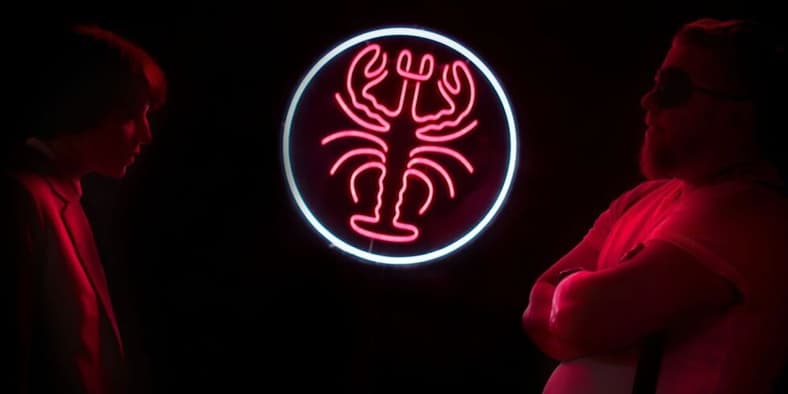
Crooks’ lead, Angela Trimbur, gives a virtuoso performance as Faye that’s perfectly tuned to the right energy. It’s a hard role to nail, and Crooks would completely fall apart if Faye doesn’t feel authentic and at peace with this stylized universe. Trimbur doesn’t just rise to the occasion; she elevates above it and gives each scene a propulsive drive forward. Faye is like if Anya Taylor-Joy’s Furiosa were mixed together with Uma Thurman’s Mia Wallace.
Trimbur is an entertaining ball of energy who is magnetic every second she’s on screen. Crooks balances Faye’s mania with a more melancholy and mean back-end. It’s the cruel comedown period that follows an explosive high. This bold perspective shift is a gamble, but one that largely works, pays off, and reinforces Crooks’ broader themes on crime’s chaotic, senseless nature and the endless cycle that it perpetuates. Ultimately, it matters less who is causing all this bloodshed and destruction than that it’s happening. Crooks is all about how there will always be someone out there to cheat, steal, and slaughter.
Crooks is a wild, fun time and a loud love letter to a lost genre of storytelling and filmmaking. However, it’s guilty of frequently becoming a case of style over substance. It’s an extremely pretty and entertaining film, but the way in which it trips over cliches and tropes in order to make its points will likely be polarizing. The excess is part of the point in Crooks, but some may be left wanting more than vibes.
Alternatively, Crooks may be dismissed as trivial, but it’s an extremely tight and streamlined story that’s 73 minutes before the end credits start rolling, yet it never feels as if it’s rushing. There are still many moments where sequences get to breathe, and characters get to let loose for several minutes. There’s definitely room for Crooks to be longer, but it’s in the film’s interest not to overstay its welcome. The type of hyper-stylized storytelling that it delivers can only sustain itself for so long, and Crooks never forces anything.
Crooks continues Mickey Keating’s trajectory as a fearless filmmaker, albeit one who still tends to hide behind homage that often keeps his characters and work at a distance. Crooks is a blast and a film that plays great with an audience who can react to its daring twists and turns. Crooks is junk food filmmaking in its truest form. It’s empty calories and a movie that audiences are likely to stop thinking about once it’s over, but it’s a hedonistically good time as it’s happening.
-
Crooks
Summary
Mickey Keating’s hyperbolized heist film comes out guns a-blazing as it tells a super-stylized story that’s rich in redemption, rewards, and a whole lot of revenge.