
A Look Back at the Zombie Craze of the 2010s


On October 31, 2010, the post-apocalyptic zombie drama The Walking Dead made its groundbreaking premiere on AMC with more than 5.3 million viewers, the largest audience for an original series on the network. Vanity Fair called it “a horror show…for people who hate horror,” and The Hollywood Reporter encouraged readers to “give Dead a chance to unfold its boldly different story,” praising its “visual references to classic Westerns” and “complicated love story” at its center. In the years following, we’d see a massive boom in zombie media, with everything from Twilight-adjacent romances (Warm Bodies) to parodies of classic novels (Pride and Prejudice and Zombies) to zombie-themed games and fitness apps (The Last of Us and Zombies, Run!). Even the first episode of Cartoon Network’s beloved animated series Adventure Time features a horde of candy zombies.
Yet, despite how inescapable they were, when we look back at the trends of the decade (bacon, mustaches, Chicago Bulls snapbacks, planking), zombies tend to be left out of the conversation. Perhaps we’ve put them in our repressed memory (were they really as cringey as those Brandy Melville Gangsta Rap Made Me Do It tops?), but I’d argue that the reason why we don’t talk about them is because we’ve forgotten why they became so popular in the 2010s in the first place.
In order to understand why this decade belonged to the undead, we have to first go all the way back to where zombies began–in history and Haitian folklore. In 2012, after noticing more trick-or-treaters dressed as zombies for Halloween than usual, University of California, Irvine, professor Amy Wilentz wrote in an op-ed for The New York Times that read, “The zombie is not an alien enemy who’s been CGI-ed by Hollywood. He is a New World phenomenon that arose from the mixture of old African religious beliefs and the pain of slavery, especially the notoriously merciless and cold-blooded slavery of French-run, pre-independence Haiti….Suicide was the slave’s only way to take control over his or her own body. And yet, the fear of becoming a zombie might stop them from doing so.” Wilentz goes on to explain that the “zombie is a dead person who cannot get across to lan guinée,” or heaven. They are “dead and still a slave, an eternal field hand,” deprived of choice and autonomy.
George A. Romero would go on to create the modern zombie as we know it in his 1968 film Night of the Living Dead, and though he didn’t intentionally mean to make a zombie film–he referred to his shambling undead creatures as ghouls–his zombies shared many similarities with the zombies found in Haitian folklore. They were both “scary in a primordial way, but in a modern way, too,” representing everything from social issues to consumerism to fascism. As Wilentz concludes, “He’s a Foxconn worker in China; a maquiladora seamstress in Guatemala; a citizen of North Korea; he’s the man…under the thrall of extreme poverty.” He can represent everything and anything, making him the perfect vehicle for us to confront our fears of the unknown and the loss of control.
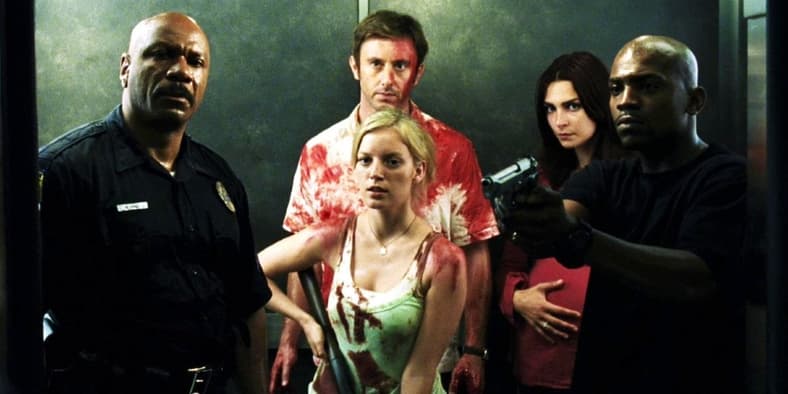
With this in mind, it’s no surprise that zombies would become popular around the beginning of the Great Recession and Occupy Wall Street. But zombies actually made their way back into our movie theaters and living rooms earlier than that with Danny Boyle’s nerve-shattering 28 Days Later. Released in the UK in 2002 and in the US in 2003, the film reinvigorated the long-dead zombie subgenre by introducing audiences to ferocious, quick-moving humans infected by the Rage virus. Like zombies, they aren’t exactly dead, but they’ve lost everything that makes someone truly alive, and like Romero’s Night of the Living Dead, the greatest threat actually comes from the humans that have survived the virus (“I promised them women” still makes me sick to my stomach).
In 2004, we would get Zack Snyder’s glossy, frenetic remake of Dawn of the Dead. Instead of sticking to the original’s satirical look at consumerism, Dawn of the Dead, much like 28 Days Later, is a reflection of the world post-9/11, a nasty, nihilistic vision of where humanity was headed. Its bleak ending suggests that the future is hopeless, and as we headed into a recession in the winter of 2007 after years of conflict, disease, and increasing paranoia, it seemed like that was the case.
This was actually the first time I had ever seen a zombie movie. My cousins and I huddled in my aunt and uncle’s bedroom to watch Edgar Wright’s horror-comedy Shaun of the Dead. Like many young teens of that era, I became obsessed with zombies. 2007 gave us 28 Weeks Later, I Am Legend, and [REC]. A handful of child zombies appeared in the horror-comedy Trick ‘r Treat. We’d see a real zombie boom the following year with 31 zombie movies being released in 2008, including Day of the Dead, Pontypool, the English-language remake of [REC], Quarantine, and the extremely controversial Deadgirl.

Meanwhile, zombie walks, like the NYC Zombie Crawl, were beginning to pop up in cities across the United States, and games like Plants Vs. Zombies, which was released in 2009, were being nominated for multiple awards. Zombieland was released in 2009, earning over $102 million worldwide, becoming the highest-grossing zombie film in the U.S. at the time until World War Z in 2013. National Geographic would release a zombie documentary called Zombies: The Truth in 2010, just days before the premiere of The Walking Dead. Like Adventure Time, the animated sitcom Bob’s Burgers would have an episode with zombies, only this time, they’d be the oldest daughter Tina’s love interests. And who could forget the bath salts hysteria of 2012, when a Miami man under the influence of synthetic stimulants known as bath salts attacked and “chewed another man’s face off”?
With survivalism becoming mainstream with the premiere of Doomsday Preppers on National Geographic, it seemed as though all we could think about was what we would do if society collapsed, and zombies represented all the ways that collapse could possibly happen, and in some ways, it was fun to fantasize about. But all of this came to an end in 2015 with Donald Trump announcing his presidential run. The zombie, after all, works best as a metaphor for the unknown—a new contagion, an unnamed collapse, a terrible government secret. But by the mid-2010s, our anxieties had faces, names, Reddit and Twitter accounts. The horror was no longer vague or abstract. And so zombies began to lose their grip on the cultural imagination, making room for a different kind of horror, ushered in by Jordan Peele’s Get Out in 2017.
I haven’t even touched the sheer amount of zombie media in the 2010s, but this gives you a sense of what we were dealing with during the time, whether you were obsessively watching The Walking Dead every Sunday night or were playing with a Monster High Ghoulia Yelps doll in elementary school. Like most of the trends of that era, zombies might have seemed random, but they were a reflection of where we were socially, economically, and politically. And if nostalgia for the 2010s continues to grow, it might be worth remembering what we were so afraid of back then.
Categorized:Editorials