
It’s Time to Admit ‘Saw’ Changed Horror Forever

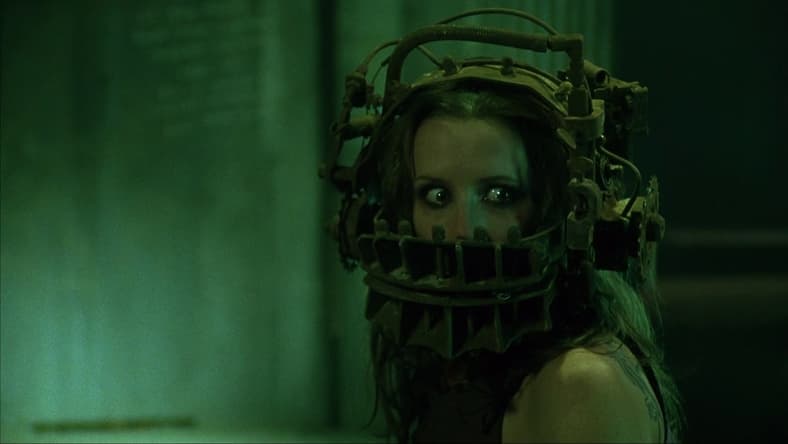
With all 10 movies in the Saw franchise now streaming on Netflix (including the spin-off Spiral and Saw X), audiences have a rare opportunity to revisit one of horror’s most misunderstood–and most influential–series from start to finish. Since the release of the first film in 2004, the series was quickly lumped into the “torture porn” subgenre of the mid-2000s, a label coined in the years following 9/11 by New York Magazine film critic David Edelstein to describe (usually) schlocky films that featured elements of confinement, mutilation, and intense human suffering. But revisit James Wan and Leigh Whannell’s series today, and it becomes clear that the franchise wasn’t just about the gore, although there’s plenty of it as the series progresses. In fact, it has far more in common with the moody psychological thrillers of the ’80s and ’90s like Manhunter, Se7en, or Kiss the Girls than it does with anything truly disturbing, and yet it was one of the freshest, unique franchises we had seen since Scream. Two decades later, it’s impossible to ignore the truth–‘Saw’ fundamentally changed the horror genre.
The premise of the first Saw movie is relatively straightforward. Two men, a sleazy photographer named Adam (Whannell) and an adulterous oncologist, Dr. Lawrence Gordon (Cary Elwes), wake up chained to pipes on opposite sides of an abandoned warehouse bathroom. A bloodied corpse clutching a revolver and a tape recorder lies between them. They discover they’ve been captured by the Jigsaw Killer, a mysterious and diabolical figure who tests his victims’ will to survive by forcing them to play his “games.” Even worse, only one of them will escape.
!['SAW' - Here's Who Is Writing Jigsaw's Next Game [Exclusive]](https://www.dreadcentral.com/cdn-cgi/image/width=788,height=443,fit=crop,quality=75,gravity=auto,metadata=none,format=auto,onerror=redirect/wp-content/uploads/2026/01/Saw_JigsawPuppet_Bike.jpg)
I was only eight years old in 2004, but I remember seeing the DVD on display at Target and being, at once, disgusted and fascinated by the cover featuring a disembodied, almost hard-looking foot and hand. It gave me the impression that this was not any ordinary horror movie–I remember my parents going out to see The Ring and briefly becoming terrified of static and mysterious phone calls–this was something beyond anything anyone had seen before. When I finally watched Saw years later, sometime around 2008/2009, I realized I was mostly right, but not for the reasons I originally thought.
Like The Texas Chain Saw Massacre, the violence and gore in Saw is actually pretty minimal; the title does most of the heavy lifting. You only think you saw Dr. Gordon cutting through his own leg. You only think you saw heaps of blood. The traps–the razor wire maze, the flammable jelly, and of course, the iconic reverse bear trap–are simple and mostly made of common objects and materials, but what they lack in sophistication (the traps will become more complex and literally have many moving parts later in the series), they make up for in psychological terror, prompting the audience to wonder how they would react if they woke up in any of these situations.
I’d argue that’s what made Saw different from other movies of its time. Saw isn’t a movie you can watch passively. It asks for active participation by introducing challenging moral dilemmas to the audience. Unlike the (literally) campy slashers or glossy teen fare of the ’90s that came before it, Saw doesn’t make it easy for the audience to figure out who’s going to make it to the end or not, and it certainly doesn’t care to make its characters beautiful, likable, or redeemable. They’re all deeply flawed people; some are worse than others, but all of them have done something that calls their sense of self-preservation and their regard for human life into question. How bad those “somethings” are, of course, is up for debate, but that’s part of what makes Saw so fun, along with its vaguely nu-metal, frenetic editing, grimy aesthetic, twist ending, and storytelling that becomes progressively more complex and inter-woven as the series continues.

The movies that came after Saw got darker and dirtier. Of course, we had films like The Hills Have Eyes and The Silence of the Lambs, but Saw introduced a new kind of ugliness to the genre. The films that came out post-Saw, like Eli Roth’s Hostel series, which also helped coin the term “torture porn,” Wolf Creek, and The Devil’s Rejects, were deeply nihilistic and a lot more vicious than anything we had seen in a while.
This was also a response to the times we were living in–it’s impossible to forget the the grainy images coming out of Abu Ghraib of prisoners being sexually abused and tortured by US Army personnel–but I’d argue Saw was the first to pick up on our general feelings of anxiety, unease, and paranoia, whether Wan and Whannell were conscious of it or not.
As Saw‘s story progressed and characters dipped in and out of future installments, the franchise became heavily serialized, making it impossible to watch one film without watching the one that came directly before it. We see this now in superhero films, which is funny considering Wan would go on to direct Aquaman in 2018. But we also see this in The Conjuring series, another one of Wan’s creations, and Paranormal Activity.
But one of the most interesting developments in the genre after Saw‘s release is what I like to call escape room horror, or movies featuring characters who must figure out how to escape a room, usually locked or containing something deadly. Wan and Whannell decided to have the majority of Saw take place in one location because of the film’s super-small budget (roughly $1.2 million), and while that might have been a challenge for other writers/directors, they used it to their advantage, creating an atmosphere that felt relentlessly tense and claustrophobic. Films like Devil, Don’t Breathe, and even Platform all owe a clear debt to Saw’s stripped-down, single-location setting.
Two decades and 9 additional films later, it’s easy to forget just how disruptive Saw was upon its release. Without Saw, we likely don’t get the wave of escape-room horror that followed, the serialized storytelling that now dominates popular franchises, or even the blockbuster-scale horror universes James Wan would later help pioneer (if you want to take a look at what he did directly after Saw but before The Conjuring, give Dead Silence a try).
Love it or hate it, Saw managed to prove itself to be one of the most influential horror franchises since Scream. And if you don’t believe me, I’d encourage you to revisit it now that every installment is available to stream on Netflix.
Categorized:Editorials