
Yorgos Lanthimos’ ‘Alps’ Answers The Question of What A Nathan Fielder Horror Movie Would Look Like [Celluloid Purgatory]

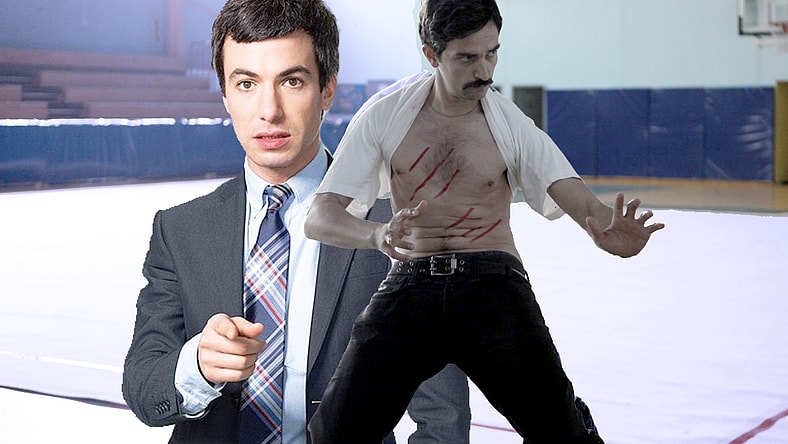
Welcome to Celluloid Purgatory, your friendly neighborhood video store (er, column), offering the finest in unseen, underseen, forgotten, and obscure films of yesterday and today. From the grindhouse to the drive-in to the movie your neighbor shot on VHS and beyond, store manager Preston Fassel hopes to offer you recommendations that will broaden your horizons even as they melt your mind.
It’s safe to say Nathan Fielder has been having something of a moment. Granted, he’s never exactly been an unknown. His reality TV satire Nathan for You was a success during its original run and made him a regular fixture of the late-night talk circuit, and the series only accrued greater love during COVID. Despite Fielder’s ubiquity, though, the esoteric nature of the program, combined with its abbreviated run (only 32 episodes over nearly five years), ensured that its popularity remained cultic in nature. Notably, as of 2025, there are still tons of folks unaware that viral phenoms like Hero Pig or Dumb Starbucks were part of a television show, let alone the name of that show.
With the one-two punch of Showtime’s The Curse and HBO’s The Rehearsal, though, everything changed. With two cable TV programs (one of them featuring Emma Stone, arguably the biggest arthouse actress and producer working today), Fielder and his Andy/Charlie Kauffman-esque brand of comedy were launched en masse onto a semi-suspecting America. Now that Season 2 of The Rehearsal has made Fielder a bona fide household name, genre fans have not only (re)discovered him but have begun to ask the inevitable question: When is he going to make a horror movie?

But What If Nathan Fielder Made An Actual Horror Movie?
The idea of what a horror movie would look like in Nathan Fielder’s hands is intriguing and, quite frankly, disturbing. We are, after all, talking about a man who went through the effort of obtaining a commercial pilot’s license and operating a 737 for the sake of a bit. One could make the argument that the Stone and Safdie Brothers produced The Curse, about a couple of amoral reality TV stars gentrifying a New Mexico neighborhood, was Fielder’s own swing at cosmic horror.
Until The Man Himself decides to take the plunge, though, I feel like we may already have the closest thing we’ll get to an authentic Nathan Fielder horror movie: 2011’s Alps. Not only does it dovetail with several of Fielder’s thematic obsessions and particular brand of (dis)comfort-watching, but it also comes from one of Stone’s own frequent collaborators, Yorgos Lanthimos, king of cringeworthy dramedies and silly dances.
Meet The Alps
The Gymnast (The Brutalist’s Ariane Labed), The Coach (Johnny Vekris), the EMT (Aris Servetalis), and the Nurse (early Lanthimos muse Angeliki Papoulia) are a quartet of Athenian weirdos united by a bizarre common goal. Though we never quite learn the details of how they came together, the four formed an organization called “Alps” dedicated to helping people recover from grief. That’s a noble goal, but their methods are the stuff of nightmares.
After identifying potential “clients” through the hospital where the nurse and EMT work, the group obsessively studies a dead person from that “client’s” life to the point of becoming living experts on them. Then, a member will approach the bereaved with an offer: they will become the deceased, moving into their old room, wearing their clothes, adopting their mannerisms, and generally behaving as though the person never died. Ostensibly, it’s a way to allow the grieving the opportunity to literally say goodbye.
In practice, it’s a psychologically devastating program, especially when the folks involved aren’t the picture of mental wellness to begin with. The young Gymnast is overly dedicated but emotionally stunted and suicidal, a dangerous combination when tossed into the mix with the domineering and sexually predatory coach. Meanwhile, the EMT sees Alps as his baby and bristles at anyone’s attempts to question his authority, toting around a literal cudgel with which to violently assert himself.
Only The Nurse seems like anything approaching normal. Self-sacrificing to a fault, she feels like the only member of the group who belongs there: if she’s not dedicating herself to ER patients, she’s doting on her aging dad, with whom she’s shared an especially close bond since her mom’s premature death.
The Looming Dread of Alps
As the tragic demise of an aspiring tennis star in a car accident will demonstrate, though, the Nurse is potentially the most cracked of the bunch. All that time caring for others has eroded her sense of self, a problem compounded by her skill for assuming dead people’s personalities. Upon learning the tennis star had the loving parents, hot boyfriend, and sterling future she’d like for herself, the Nurse usurps the EMT’s authority and supplants The Gymnast by taking over the dead girl’s life.
Although it’s clear from jump that this isn’t going to go well, Alps takes some surprising—and upsetting—turns that most genre fans probably won’t choreograph. Put another way: what Alps lacks in gore it more than makes up for as an exercise in looming dread. Nowhere else, perhaps aside from a Nathan Fielder production, has horror so effectively been generated simply by making the audience uncomfortable. The characters in Alps take the Fielder Method to ludicrous and often disturbing extremes in copying dead people, going far past what (one hopes) Fielder would ever consider.

And you will be uncomfortable. Conversely, watching characters assume the identities of dead people and insinuate themselves into their loved ones’ lives gets more disconcerting the longer the movie goes on, especially as The Nurse resorts to increasingly warped and desperate moves to further expropriate the tennis star’s identity.
Early Yorgos Lanthimos At His Most Uncomfortable
Particularly in his early career, Lanthimos trucked in making his audiences squirm, whether through a lingering shot of a closed trunk or the non-resolution of whether someone was going to gouge out their own eyes. That talent for violating comfort zones is on display writ large here, spread across entire scenes and sequences rather than one shot. Something bad is always just about to happen in Alps. Just when you think you’re prepared, the movie will take a hard left turn that throws you off. In particular, one character’s decision regarding their sexual future is taboo-breaking and deeply deranged in a way most directors would never dream of touching.
Beyond the more visceral elements at play, there’s a deeper, realer dread lurking beneath the surface of the outwardly cringe-inducing moments. At its heart, Alps is about the very human desire to want to be someone else—anyone else—at those moments where our lives are worst, and our ultimate inability to be anyone other than ourselves. Granted, people can change, but that requires hard work, self-improvement, and time. Why do all that and risk not making any personal growth when you can just sidle into someone else’s ready-made life?

Illusions of Reality Start To Crumble
It’s a conceit not too dissimilar to what social media users do every day: craft an artificial, carefully constructed but ultimately fragile false image to the world and then occupy it for as long as you can, living the fiction and hoping to become the mask. People can’t become conceits, though, the same way a living person can’t just “become” a dead one. Holes begin to appear. Inconsistencies emerge. Pesky reality sets in.
In Alps, as in real life, that inevitably leads to catastrophe. Notably, we don’t really get to see the Alps “help” anyone: at best, grieving families develop profoundly codependent relationships with the “replacements” and are unable to move on; at worst, it keeps their wounds open and festering. Only the Alps themselves seem to take any material benefit from the exercise, though “benefit” is a loose term here.
That desire for escape is buttressed by the film’s omnipresent sense of control, serving as a brutal reminder that taking one’s life in one’s own hands isn’t always one’s own choice. The Nurse and The Gymnast are both bound to predatory older men through age, experience, and position. Each spends the movie desperately attempting to negotiate their way out of their current positions, with mixed to negative results; every kindness comes with some kind of strings attached, whether it’s as simple as a free haircut or as spiritually deflating as heaping praise on an undeserving predator.
Portraying The Reality of Being A Woman in Alps
That the film’s two “villains” are a pair of abrasive men and that our “heroes” (to use that term very loosely) are competent yet desperate women underscores the gendered perspective in most of Lanthimos’ works. To wit: it sucks to be a person, and all people are trapped in systems of oppressive, suffocating control, but it really sucks to be a woman. Far be it from Lanthimos to be so reductive as “man good, woman bad,” though. Yorgos knows suffering doesn’t equal sainthood, and The Nurse ultimately demonstrates herself to be just as capable of predatory and abusive behavior.
While we do get the tiniest of silver linings in the form of one member potentially leaving the group, it’s immediately undercut by the gut-punch ending. In a bombastic sequence set to a cover of Popcorn, we finally get to see a character apparently achieve their dreams, only for Lanthimos to undercut the moment with a single line of dialogue that ends the movie on a surprisingly cruel note. Sartre said Hell is other people; in Alps, Hell is the self, and, worse still, there’s no escape from the self, or from the systems of control that keep us stagnating in our current forms.
A Distinctly (And Purposefully) Frustrating Ending
There’s an element of frustration in Alps in that, as opposed to more feel-good Western productions, it doesn’t offer any answers to the questions it poses. Many, if not all, of the characters end the movie where they started, if not geographically than psychologically. The suffering they experience doesn’t imbue them with wisdom or grant them divine knowledge to escape their circumstances. Sometimes, life’s a bitch, and then you die.
In Alps, life’s a bitch, you die, then someone else takes over your life and discovers that it’s still bitch. That may not exactly be an inspiring message, but not all movies are meant to be inspirational; some are meant as think-pieces, objects of meditation to study for one’s own edification. Alps leaves the audience with quite a bit to think about, especially if you’re Nathan Fielder. If Season 3 of The Rehearsal opens with Canada’s favorite reality-bending comedian hanging out in front of a funeral parlor, we’ll know what he spent his Summer watching.
As of the writing of this article in August 2025, Alps is streaming on The Roku Channel or available to rent or buy via Amazon, Apple, Fandango, Google, and YouTube.
Categorized:Editorials