
‘If I Had Legs I’d Kick You’ Director Mary Bronstein Talks The Raw Honesty of Confronting Cinema

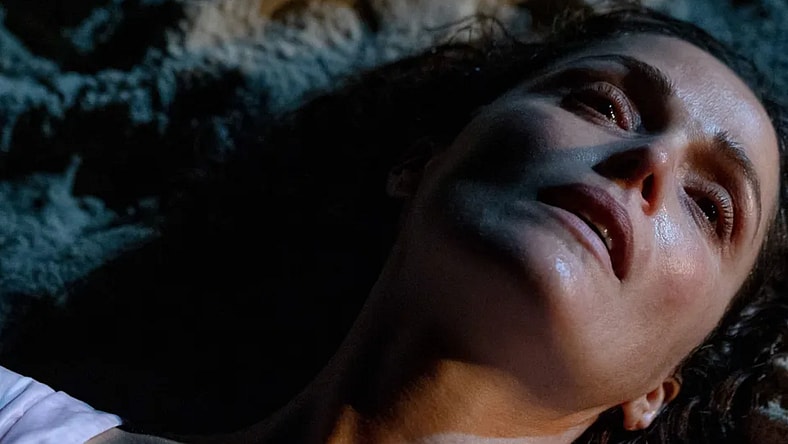
Writer and director Mary Bronstein’s debut feature film, If I Had Legs I’d Kick You, is a harrowing representation of living a life where no matter how loud you scream, you’ll never be heard. It’s a raw portrayal of motherhood and caregiving that’s never easy to watch, but it’s still enchanting with Rose Byrne’s career-defining performance and gorgeous cinematography fixated on Byrne’s face as she claws her way through every difficult hour of her life.
We spoke with Bronstein about how healing reactions to the film have been, and the power in being able to tell a story that is an authentic and true expression of you.
Dread Central: I got to see this at Fantastic Fest, and it was such an incredible experience.
Mary Bronstein: Oh yeah. I had so much fun there. Were you at the first screening?
DC: Yes, I was at the first screening in the front row. I really got into the movie quite literally. It feels like that was a great crowd. I have so many questions for you, but my first one is, as a female filmmaker, did you ever feel pressure to tell the right story about motherhood?
MB: You know what? I did not. I wrote the script on spec. Nobody was waiting for it. No one knew about it. Nobody was over my shoulder. So by the time I got the script to a place where I wanted to find a home for it to get made—I spent, I think, two years honing it. I was doing other jobs and things, but it was my passion project. And so by the time I finished the script, there was no other brain that it had been filtered through. It was a pure expression of me.
And I have to say that when I found A24 as a partner, I said, “Well, this is the movie. This is the script. I’m not looking to develop the script. I’m just looking to make the movie.” And they were like, “Let’s do it. No notes. Let’s make this movie.”
DC: That’s amazing.
MB: It is amazing. And I will say that—and not all filmmakers can say this, I know a lot of filmmakers, and I have read a lot about filmmakers’ journeys—that from my head to the page to the screen, I can say with full honesty that I didn’t make any creative concessions I made.
DC: That’s so great. And exciting.
MB: It’s one of the things I’m most proud and excited about. There were some changes I made for logistical reasons, but there’s nothing that I changed creatively because somebody made me. When I set out to make this movie, there are a lot of movies about moms, there are a lot of movies about women having nervous breakdowns. There’s a tradition of it in film. But if you go back and you look, you’ll see that most of them, if not all of them, but I don’t want to say in case I’m wrong, let’s say 99% of them were made by men.
I made the movie I wanted to make. If I Had Legs I’d Kick You is a pure expression from somebody who was raised female in a society that’s hostile towards females and became a mother in a society that is, even though we love moms, is hostile towards moms. And I wanted to make something that really got at impolite ideas and topics and themes about being a mom and being a woman.
I think that you don’t have to be a mom to relate to the movie. I’ve had many people relate to it that aren’t, but if you are, I think there’s an extra level there to relate to. Are you a mom?
DC: I’m not a mom. This movie made me want to call my mom, though.
MB: Because if you’re not a mom, you have a mom, right?
DC: Yeah, exactly.
MB: And that’s important. I love that you called your mom. I love that.
DC: I was like, “I love you. Thank you so much for everything you’ve ever done for me.”
DC: I love that. So many people have come up to me after screenings, even men saying either, “I’m going to call my wife” or “I’m going to call my mom.” To me, it’s like the Grinch, because my heart is all shriveled up, I’m dead inside, whatever, like the Grinch. [Laughs] Those comments make my heart grow. Because it means that you’ve seen something in the film that is true, that is true emotionally, that you want to share with the person who is in the position of the character in the film.
So for me, that is exactly what I wanted to do. I wanted to make something radically true from a female point of view, and not concerned with whether people are going to like it or not. Because if you sit at a computer or however you write, and that’s in your mind at all, you’ve already lost. That’s how I think of it. And so if you try to make something for everybody, you’re making something for nobody. So that’s my philosophy.
My philosophy is the more specific a story is—like I said, not everyone’s a mom. And also by the way, 90% of moms are not in the position that this mom is in with a sick child. That’s not a typical experience of a mom. So already, If I Had Legs I’d Kick You is very specific. And I think the more specific you get, the more somebody can find themselves in the film.
DC: That’s so true, though, because my family when something through something similar. And I wanted to sit my mom down and be like, ‘Hey, can we watch this and then hug each other?’ It really is so affecting.
MB: Please take your mom. Not that I care about tickets, but I care about you having this experience.
DC: Well, especially because caregiving in film is about caregiving sick parents, not sick children. And I think this is such a unique perspective on that, and what that takes out of you as a person. Caregiving is exhausting, and we don’t talk about it.
MB: It’s exhausting. We take it for granted. It’s not respected; it’s something that you’re supposed to do
DC: Well, especially as a mom, you’re supposed to take care of your kids, so why wouldn’t you do it? It’s just expected.
MB: And if your parents get old and sick, you’re just supposed to take care of them. Your emotions are not supposed to enter into the conversation. But human beings have emotions. And no matter how loving or caring or wonderful a person you are, a person can only take so much. And that’s what this film is speaking to.
This is not a bad person. We don’t know what type of mom she is outside of this situation. Before the situation happened, this kid is seven years old. We don’t know what it was like before the kid got ill. And we don’t know what it’s going to be like when the kid gets better. But we’re in a very specific moment where she has reached the brink of what she can take as a human being. And in our society, our culture, I should say, it’s inappropriate for moms to say, “I can’t take this. Yes, I need help. I need to go somewhere else and have someone else do this so that I can come back.”
And [people] say those stupid things to moms all the time. And I have one in the film where it’s like, “Oh, you’ve got to put your oxygen mask on first.” But you can’t give away what you don’t have. So Linda is at a point where she has nothing left. She has nothing left to give, and she’s literally yelling in people’s faces, and they still can’t hear her.
DC: That actually plays into a question I was curious about in making If I Had Legs I’d Kick You. Did you find catharsis at all for yourself in making this movie?
MB: I’m going to disappoint you by saying no.
DC: No, that’s actually not disappointing at all!
MB: I didn’t find catharsis in that. Making the movie didn’t heal me in any way, but showing the movie, speaking to audience members personally, having people send me DMs that break my heart in half, and make it grow. Looking out at an audience after they’ve seen the film and seeing their faces, that is cathartic and even beyond catharsis, that is almost on a spiritual level, meaningful to me.
Art is not to make and put in a drawer somewhere in a very sort of postmodern way. I very much believe that the artist makes the art, and then it gets put out into the world. Art is a form of communication.
DC: Yes, oh my God!
MB: Every form of art, writing, music, film, painting, any kind of art that you could mention, it’s a form of communication. So it’s a dialogue. As an artist, I make the film and then I give it. I trust my audience, which is why If I Had Legs I’d Kick You doesn’t handhold, and the film asks more questions than it gives answers. That’s not to frustrate people. That’s because I trust the audience member. I trust the person who’s going to sit down with their popcorn in the seat. I trust them and any interpretation, and here’s where I get really postmodern, but I can’t take credit for it. This is how some of my filmmaking idols speak about their work, especially David Lynch. There is no interpretation, and I really believe this, there’s no interpretation that an audience member can have about some of the more abstract elements of my film that can be wrong.
It cannot be wrong because it’s correct for that person. And it’s none of my business. Like I said, I give it to you, Mary Beth, and everybody else. I give it to you, and whoever you are when you’re sitting down in that chair, you’re coming with, like you said, you called your mom. I don’t know what’s up with you and your mom, but whatever it is, you’re coming to the theater with that. That’s how you’re going to see the film. That’s how you’re going to interpret some of the more abstract elements or the elements that are not expositional. And you can only be right. It can only be right. And the best, most exciting thing for me is to hear people’s interpretations.
If I Had Legs I’d Kick You is out now in theaters.
Categorized:News