
‘Leviticus’ Perfectly Captures the Horror of Homophobia

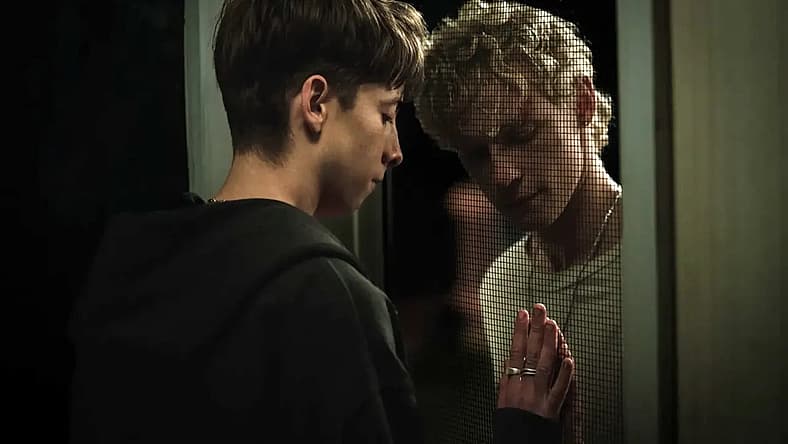
At the beginning of the year, I made a list of horror movies and thrillers coming out in 2026 that I was excited to see. Right up there with 28 Years Later: The Bone Temple was Leviticus, directed by Adrian Chiarella. The film follows Naim (Joe Bird, previously Riley in Talk to Me) and Ryan (Stacy Clausen, also seen in Netflix’s Thrash), a doomed pair of gay boys in a close-knit religious community in Victoria, Australia. A series of so-called “deliverances,” which are like conversion therapy meets exorcisms, calls in some kind of demonic supernatural force. This entity terrorizes victims by appearing invisible to the rest of the world and looking like their loved ones.
Chiarella’s film feels significant for a few reasons. Sometimes genre fans get a horror movie that addresses sexual expression, like The Substance, or queerness, like I Saw the TV Glow, but rarely the intersection of the two. Especially in a post-Bodies Bodies Bodies world, where gayness is often incidental in horror movies, I was surprised to see that gayness was the driving factor in Leviticus.
Regarding the sexual boogeyman elements, film critics have already drawn comparisons between this film and It Follows. At the time, this idea felt fresh because it riffed on the puritanical moralism that persists in society today. The Maika Monroe-led film takes the sluts-deserve-to-die motif of horror movies and drags it to hell. But even though both Leviticus and It Follows feature a monster that punishes you for sins of the flesh, the more interesting parallel is how both films comment on shame. Because even if you’re affirmed enough in your desires to actively pursue carnal pleasure, shame can linger in the shadow like a specter.
More than It Follows, Leviticus feels like Disobedience, directed by Sebastián Lelio. Rachel Weisz of The Favourite and the Dead Ringers reboot stars as Ronit, a woman who returns to the Orthodox Jewish community of her formative years because of her father’s funeral. The story of why Ronit was banished starts to unfurl, all while she strikes up a torrid romance with Esti, played by Rachel McAdams of Send Help and Red Eye. External pressure from a staunchly religious community is the real villain in both this film and Leviticus.
Not only do the parents of Naim, Ryan, and the other queer Aussie kid, Hunter, actively facilitate these “deliverances” to exorcise the gay out of their kids, but, spoiler alert, we find out that the parents’ destructive wishes are intentional. An especially gut-wrenching moment is when Naim’s Mom (Mia Wasikowska, a far cry from our warm gothic heroine in Crimson Peak) coolly reveals that she knew the deliverance ritual would keep Naim terrifyingly isolated and therefore safely celibate.
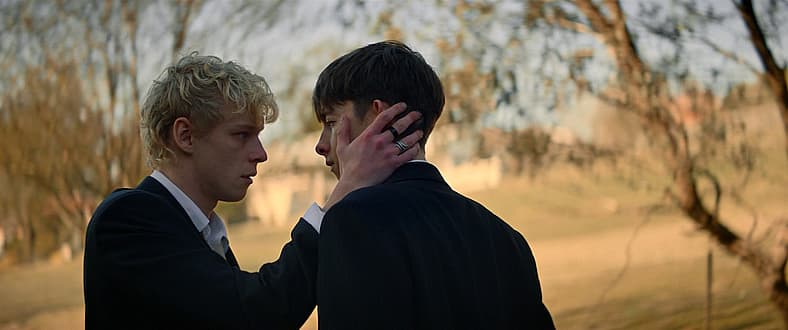
I spent my own gay teenage years mulling over the stance of my Catholic high school, which was that gay people should live a life of celibacy and never enter a same-sex relationship. What I heard was that if you’re gay, you could never experience tenderness, romance, or intimacy. Looking back, I don’t think it was random that I seriously considered dedicating my life to God and joining a convent after graduation.
Even though I didn’t have the threat of “deliverance” over my head, I felt the need to protect my reputation as straight in the community. A particularly painful time was when I was ambushed with a semi-public promposal by a boy who disgusted me. I felt pressured to say yes — not just because I was afraid of being seen as a bad sport and socially ostracized. Subconsciously, a part of me knew that I needed to make sure I could beat any gay allegations. I put myself through months of discomfort and sexual harassment because I knew that being branded “gay” in South Carolina was as good as being dead.
The same fear and stigma that drives Leviticus forward seeped into my classroom experience as well. As a history nerd, I never had a problem with theology class or its teachers. But my junior year religion class was miserable. This instructor was an ex-military Silent Generation hardass, loved by no one and feared by all. One of the most memorable days in his class was when this beautiful, popular girl decided that the hill she wanted to die on was gay rights. I’ll never forget my teacher’s red cheeks and neck, spit flying out of his mouth as he tried to argue her down.
I’m sure at some point he brought up the Old Testament book of Leviticus, which outlines all acts deemed unclean and unholy. Famously, Leviticus 18:22 says, “Thou shalt not lie with mankind, as with womankind: it is abomination.” Leviticus 20:13 builds on that, saying, “If a man also lie with mankind, as he lieth with a woman, both of them have committed an abomination: they shall surely be put to death; their blood shall be upon them.” A line of Leviticus that doesn’t get as much buzz, amid the extremely detailed sexual code of conduct in Leviticus 18 – 26, is the line that condemns parents sacrificing their children.
Along with the gay debate, the other day I’ll never forget from junior year religion class was when our teacher let his mask slip and told us about the exorcisms he had witnessed, co-signed by our local diocese. Long before I had seen The Exorcist or had become familiar with demonic possession tropes, he spoke about unnatural strength, inappropriate knowledge, and strange, deep voices. The religious fervor witnessed in Leviticus doesn’t seem unrealistic to me at all; fairly recently, the newspaper of record where I once lived said that the Catholic Diocese of Charleston has experienced an influx of exorcism requests. (Seemingly to calm nerves, a Catholic news site teased out the part where the priest said actual demonic possession is rare.)
It’s still telling that this far into the 21st century, dozens of people in this community alone feel the need to seriously enquire about targeted, ritualistic, religious help from priests. Of course, a small part of me fears that modern-day exorcism requests here aren’t a response to a genuine paranormal encounter, but the result of stubbornness, rooted in fear of the unknown. We’ll probably never have numbers on that, but we do have data on how many transgender adolescents are separated from lifesaving medical care, among other LGBTQ+ issues. My lived experience and Leviticus are only a snapshot of the kind of albatross around queer people’s necks.
The good news is that I had my own listening-to-Frank-Ocean-while-the-bus-zooms-away moment when I went to see Leviticus. Even though it was a Tuesday night, the screening was sold out. The movie club happy hour beforehand was bursting at the seams; people who had wanted to attend but couldn’t snag a ticket still showed up. Dozens of people milling about the movie theater because of gay horror movie hype is something this misfit, closeted freak — who once thought living in a convent could solve the gay problem — never could have imagined. With Is God Is and Backrooms and Obsession, Chiarella’s film affirmed that horror movie fans will continue to be fed this summer. But particularly in June, it feels good to be a queer horror movie fan.
Categorized:Editorials