
Loved ‘Backrooms’? Try These 10 Liminal Horror Films!

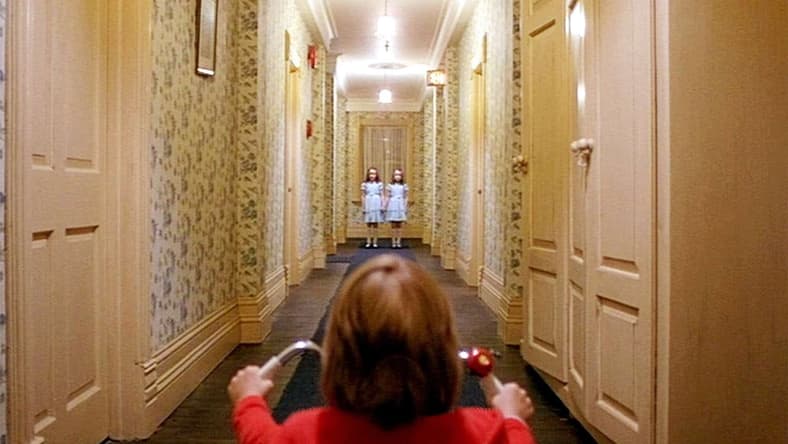
Kane Parsons’ Backrooms has pushed liminal horror into the mainstream, but there are many other impressive examples out there to discover.
Horror is such an evergreen and enduring storytelling genre because absolutely anything — even ordinary spaces — can become terrifying nightmare fuel in the right context. “Liminal horror” is a fascinating trend that’s grown out of the analog horror boom that’s gained traction over the past decade. Liminal horror is essentially a subgenre that creates tension, unease, and an uncomfortable sense of deja vu out of unusually empty “transitional environments,” such as malls, office spaces, and subway stations. At face value, there may not be any active dangers, yet the sheer spectacle of busy environments that seem hollowed out, dead, and wrong creates its own sense of dread. Kane Parsons’ Backrooms has turned a low-budget liminal horror film into a summer blockbuster. Anyone who is interested in getting lost even deeper in liminal horror’s labyrinths has some exciting options to consider.
Exit 8 (2025)
Directed by Genki Kawamura; Written by Kentaro Hirase, Genki Kawamura

Genki Kawamura’s Exit 8, a film that’s based on a video game of the same name that was largely inspired by the existing Backrooms trend, is quite possibly Backrooms’ closest liminal horror analog. Exit 8 creates tension out of a busy Tokyo subway station that turns into an endless purgatory for the film’s perilous protagonist. Exit 8 successfully recreates the nature of its source material video game, in which the subway’s repetitive tunnel features minuscule differences that must be discovered in order to progress any further. It’s honestly a brilliant way to get the audience to lock into every piece of set design and fully immerse themselves in the experience. This increased focus makes the corresponding scares make an even greater impact. Exit 8 also works with a relatively small budget, which is occasionally felt. However, it’s still remarkable that the film works so well and genuinely makes an innocuous subway tunnel feel like a layer of hell.
Lost Highway (1997)
Directed by David Lynch; Written by David Lynch, Barry Gifford

It should come as no surprise that David Lynch was a filmmaker who understood the impact of liminal horror and how to subvert the ordinary and make it sinister. The duality between good and evil and the tug of war that exists between these extremes is explored in all of Lynch’s works. He fundamentally understands how to make the mundane become malevolent. In fact, Twin Peaks’ Black Lodge is arguably one of pop culture’s most famous liminal spaces and a proto-Backrooms in many respects. Lost Highway is a sprawling neo-noir psychological thriller that features a frightening fugue state that’s triggered by terrible trauma. Its ambitious story juxtaposes two seemingly disparate stories that cover a lot of ground, yet still touch on liminal horror in a visceral, raw manner.
Fred Madison’s (Bill Pullman) infamous phone call with William Blake’s Mystery Man doesn’t depict liminal horror in the traditional sense, yet its perversion of the pedestrian conjures an identical feeling. Fred’s response, “That’s fucking crazy, man,” is the perfect distilled response to liminal horror. The chilling videotape that Fred and Renee (Patricia Arquette) receive, that predates The Ring, mind you, could easily qualify as a Backrooms video. There’s even a pivotal setpiece that takes place at an isolated cabin in the middle of the desert, as if it’s “noclipped” into this unusual place. Lost Highway’s emphasis on recorded video as the ultimate, objective truth also meshes with how so much of liminal horror revolves around the intangible, imperfect nature of memory.
The Shining (1980)
Directed by Stanley Kubrick; Written by Stanley Kubrick, Diane Johnson

Some of liminal horror’s most effective environments include shopping malls and office spaces because they’re areas that are typically filled with people. The same is true for a hotel, especially one as big and lavish as The Shining’s Overlook. The Shining becomes a haunting, mind-bending experience for many reasons, but part of the reason that its visuals hit so hard is that it takes place during the hotel’s maintenance season. The Shining is already such an isolating story that’s all about playing with Jack Torrance’s (Jack Nicholson) sanity and wearing down resistance. It’s easier to accomplish this when he’s a small speck in huge empty frames. If all this weren’t enough, Kubrick intentionally designed the Overlook to have impossible architecture that’s meant to confuse and disorient the viewer, right down to the aggressive pattern on the carpet. This feeling of being lost in an impossible space reaches its apex when the film’s finale involves a chase through a daunting hedge maze that almost seems sentient.
Vivarium (2019)
Directed by Lorcan Finnegan; Screenplay by Garret Shanley, Story by Garret Shanley, Lorcan Finnegan

It’s easy to create a bunch of barren spaces that feature eerie lighting and music, but the very best liminal horror actually uses this uncomfortable imagery to say something deeper. Vivarium is a surreal story about conformity, apathy, and the hurdles and compromises that are faced by newlyweds. There is no shortage of genre films that use suburbia’s formulaic nature as a larger statement on societal expectations and the loss of individuality. Vivarium stumbles to make its points, but is still more successful than comparable horror films like Don’t Worry Darling and Blink Twice.
Jesse Eisenberg and Imogen Poots play a conflicted couple who are ready to finally start the rest of their lives, yet find their new home a source of sinister stasis. Vivarium turns the safe space of a home into a source of dread, while this idea extends to the neighborhood elsewhere that’s decked with unlimited versions of the same house and endless roads that lead to nowhere. Vivarium also understands the value of how an oddly modulated performance that feels like an alien’s impression of a human can wonderfully complement the foreign liminal horror aesthetic.
Silent Hill (2006)
Directed by Christophe Gans; Written by Roger Avary

Konami’s Silent Hill has struggled to reach the same mainstream success as Resident Evil in gaming’s survival horror genre, but the franchise’s highs are true psychological horror magic. Silent Hill’s cinematic adaptations have also failed to resonate with audiences. Silent Hill’s second and third cinematic installments are disasters, but there’s a strong case to be made that the 2006 original is one of the most underrated video game movies. Christophe Gans’ film is imperfect. However, the film absolutely nails the video games’ off-putting aesthetic of an abandoned community that exists between worlds. Silent Hill is filled with fog, which obscures areas and forces characters — and the audience — to question what they see. Silent Hill’s many horrific creatures, like the infamous Pyramid Head, are also pure liminal space nightmare fuel. These surreal sights are manifestations of real trauma that have been infinitely refracted so that they barely resemble reality, but that kernel of truth remains. Kane Parsons has spoken about his interest in making a Portal movie, but he’d absolutely kill it with a Silent Hill adaptation.
Cube (1997)
Directed by Vincenzo Natali; Written by André Bijelic, Graeme Manson, Vincenzo Natali

Vincenzo Natali’s Cube was way ahead of the curve with the modern “death game” subgenre trend, but it’s also an early example of claustrophobic liminal horror. Cube is like if Saw’s Jigsaw was in charge of creating the Backrooms. A group of strangers wakes up in a white, sterile space that they realize is just one room in a labyrinthine cube that’s full of lethal boobytraps. These individuals must trust each other and work together in order to solve the trap’s puzzles and find a way to safety. The barren nature of the Cube’s rooms evokes the alienating atmosphere of liminal horror, even if these rooms are anything but ordinary. It’s a great example of how to create fear from the unknown and why simplicity can be a sharp weapon. It’s not hard to picture the Backrooms evolving into Cube’s environment as a means of defense and self-preservation, almost like a manifestation of its victims’ pain and anxiety. It’d be very satisfying if Backrooms‘ success gives Cube a bit of a resurgence as it’s discovered by Gen Z’ers. As long as Kane Parsons doesn’t churn out “Backrooms 2: Hyperbackrooms” and “Backrooms 0.”
Blair Witch (2016)
Directed by Adam Wingard; Written by Simon Barrett

Backrooms is a landmark liminal horror film, but it’s also become a legendary example of banking on burgeoning independent directors and films. Backrooms’ success brings The Blair Witch Project to mind in terms of a lo-fi film that does a lot with a little. Backrooms and The Blair Witch Project are very different movies, but it’s fair to say that the former might not have been possible without the latter. There have been several attempts to build on The Blair Witch Project’s success. While none have matched the original film’s heights, 2016’s Blair Witch by Adam Wingard and Simon Barrett doesn’t get enough love. Blair Witch likely isn’t the first franchise that comes to mind when liminal horror is in discussion. That being said, these films — particularly 2016’s Blair Witch — do incredible work when it comes to turning ordinary nature into a foreboding prison.
There’s something even more terrifying about getting lost in the woods because it’s a seemingly endless space. There’s no proper sense of scope. Blair Witch leans into this tension and paranoia through similar spaces. However, it also triggers a disorienting time loop that literally has characters tripping over themselves. Escape seems hopeless when time itself can’t even be trusted. Time is also in flux in Backrooms, but Blair Witch really embraces cosmic horror in the best way possible. It feels like fate itself is willing these characters to stay lost and become sacrifices.
Kairo (Pulse) (2001)
Written & Directed by Kiyoshi Kurosawa
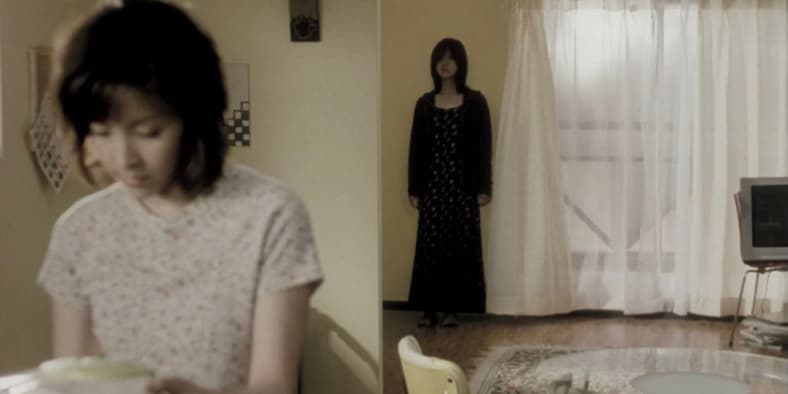
Kiyoshi Kurosawa is a haunting Japanese filmmaker who consistently creates isolating worlds that feel muted in color, life, and normalcy. Kairo (Pulse) is Kurosawa’s best liminal horror film, and he even manages to extend the concept to digital worlds. Kairo breaks ground in the “dead Internet space” as it presents one of the most chilling versions of a ghost in the machine. Kairo came around at the perfect time in the 2000s, when a certain terror surrounded technology—and the Internet’s evolving capabilities. Kairo looks at digital martyrdom and explores the dangers of vast online worlds and their ability to preserve the past, and even the dead. Kairo creates a unique aesthetic where the real world is drab, colorless, and lifeless, whereas the Internet offers a more rejuvenating alternative. It’s the perfect lure to draw in the weak and spread this sickness. Despite its good intentions, the only liminal horror that came out of the 2006 American Pulse remake was from the hordes of empty movie theaters.
The Empty Man (2020)
Written & Directed by David Prior

Liminal horror comes in many shapes and sizes, so it’s exciting when the genre can flex its muscles a little and blend together with cosmic Lovecraftian horror, like in The Empty Man. There’s a lot going on in The Empty Man, a film about an ex-cop’s mission to track down a missing girl that leads to a domino effect of cults, curses, and cosmic terror. The Empty Man takes advantage of its long runtime in order to disorient the audience and pull the rug out from under them when it finally feels like the truth has come to light. In addition to its constantly evolving storytelling, The Empty Man fills this dark quest with dead spaces and abandoned worlds that create a palpable nihilism. The entire film makes it feel like something cursed is being messed with, and the vacant liminal spaces amplify this anxiety. The Empty Man is a 2020s horror film that’s so under the radar that it hardly even registers. However, its unique take on liminal horror might finally be an in that pulls in a new crowd and helps it find a bigger audience.
The Endless (2017)
Directed by Justin Benson, Aaron Moorhead; Written by Justin Benson
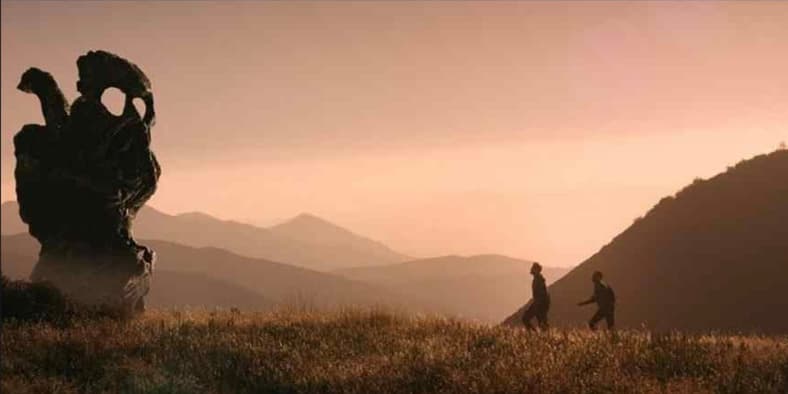
Justin Benson and Aaron Moorhead have made an impressive name for themselves as pitch hitters for Marvel, who have seen them doing standout work on Loki, Moon Knight, and Daredevil. However, real ones know that the duo’s best work lies in a handful of low-budget sci-fi/horror films that exist in their own interconnected universe. 2017’s The Endless is a harrowing story of two brothers (played by Benson and Moorhead) who are survivors who narrowly escaped a UFO death cult, only to find themselves returning to their roots after they receive an unsettling videotape that requests their presence. As psychologically daunting as it is for these brothers to revisit the place, they’re also stuck in a time loop trap that has them physically repeating the past.
There’s an unassuming and restrained nature to The Endless’ approach to time-bending terror that’s very liminal horror adjacent. An ordinary commune becomes infinitely more intimidating when it’s repeatedly revisited and inescapable. The Endless sticks the landing with its liminal space elements and cosmic time loop terror, both of which are not small feats. At its core, it’s really a story about two brothers who are still processing a shared traumatic event in very different ways. The Endless’ human element and raw emotions are just as powerful as its flashier genre flourishes.
Categorized:Editorials Movies