
2016: The Year Mike Flanagan Established Himself as One of the New Masters of Horror

These days, every horror fan knows the name Mike Flanagan. He’s a filmmaker who has become synonymous with emotional tales of terror. A master craftsman who knows how to scare his audience and break their hearts at the same time. He’s delivered what I consider to be peak horror television in series such as The Haunting of Hill House and Midnight Mass. He’s also our modern-day Stephen King whisperer, having made a masterpiece of a sequel to The Shining in Doctor Sleep, played Gerald’s Game, with a “Carrie” series still to come. Flanagan has no shortage of impressive accolades to his name. But that wasn’t always the case. In fact, it was exactly ten years ago that he began to cement himself as one of our next great masters of horror.
Though he had released Absentia two years prior, I first became familiar with Flanagan through his haunted mirror picture, Oculus. A terrifying, gruesome tale starring Karen Gillan and Brenton Thwaites, the film declared the filmmaker as one to watch. And then 2016 happened.
It was that year that Flanagan released not one, not two, but three horror films, all with varying degrees of success. Hush, Ouija: Origin of Evil, and Before I Wake all came out that year, officially marking the Mike Flanagan era. Well, technically, Before I Wake didn’t release in the States until 2018, but it did debut internationally in 2016. Either way, these films all exhibit various themes, techniques, and actors that audiences have since grown to associate with the uber-talented filmmaker.
The Nightmare of Before I Wake

Before I Wake was the first of the trio to arrive, debuting internationally on April 7th, 2016. Just about every great director has that one not-so-great movie. For Flanagan, that’s Before I Wake. That said, the film isn’t without his touchstones that elevate it to a little more than your average studio debacle of a horror film.
Originally slated to release in the States on September 25th, 2016, distributor Relativity Media filed for bankruptcy. It was eventually picked up by Netflix. And, well, it unfortunately feels a lot like a straight-to-Netflix movie.
The film tells the story of Cody (Jacob Tremblay, playing the cutest kid ever), a boy whose dreams…and nightmares…become reality when he sleeps. He’s adopted by Jessie (Kate Bosworth) and Mark (Thomas Jane), a couple who lost their son to a tragic accident some time ago. When they discover Cody’s power, Jessie begins using him to bring their son back while he sleeps. But what starts as magical turns to terror once the couple discovers the Canker Man, a horrific entity that takes people back to whatever nightmare world it comes from.
That may sound like your average “loner child haunted by monster” tale—and in so many ways it is—but one key difference puts on display an element that has cemented Flanagan into the souls of fans everywhere. Before I Wake beats with a tragic heart. Emotions run hot throughout the film, as these three broken people, all of whom have lost someone close to them, attempt to overcome those traumas and become a family. There are numerous moments throughout where Cody questions his adopted parents about their son, with an adult understanding from Tremblay that’s absolutely crushing. We’ve all wished to see that one person we’ve lost just one more time. Even though Jessie’s actions are clearly wrong, I don’t hold them against her. She’s a grieving mother who wants only to see her son again.
Flanagan has essentially made his own genre out of people who are haunted by loss. Nearly every one of his works, beginning with Absentia, feature characters tormented by the pain of tragedy. Visions of deceased loved ones follow them wherever they go, sometimes terrifying, but always heartbreaking. As we eventually learn in Before I Wake, Cody’s skeletal Canker Man is no more than a representation of his cancer-stricken mother, who passed away. His last vision of her was one that developed into something unrestrained and monstrous. All he needs is someone to see past his trauma and accept him for who he is.

Hush…This One’s a Scream
Just one day after Before I Wake came Hush, also released directly to Netflix. However, I’d argue it’s one of the best originals the streamer has ever had the distinct honor of carrying. Thank the film gods, it finally found its way onto physical media as well, courtesy of Scream Factory.
In Hush, we follow Maddie (Kate Siegel, Flanagan’s wife), a deaf writer living on her own in the woods. When a killer comes knocking, Maddie must use her gift for predicting outcomes to take down the stealthy psychopath.
As many of you know now, Hush was widely acclaimed, putting a fresh spin on the home invasion film. Stephen King even compared it to Halloween and the intense Audrey Hepburn movie, Wait Until Dark. Never seen the latter? You really, really should.
There’s a lot to love about Hush. From putting us in Maddie’s shoes by removing all sound, to Siegel’s powerful performance and the sinister malevolence of the killer (John Gallagher Jr.), Flanagan delivers arguably his most nail-biting tale. Yet for all the tension or the panic that comes from watching the masked villain creep behind an unsuspecting Maddie, Flanagan again puts the focus on character first.
We root for Maddie. We want her to succeed. In part because the filmmaker and Siegel pull us close to the character. Those of us without the disability can never truly know what it’s like, but for brief instances, Hush allows us to exist in a world without sound. In the mind of an author who may have lost her hearing but hasn’t lost the ability to find depth and beauty in the world. Maddie’s a wonderful character. Perhaps that’s why her story is one of the few in Flanagan’s films to not end tragically.
Outside of certifying the talent of Flanagan that audiences had come to suspect with Absentia and Oculus, Hush also began another trend that we’d see in his work…the appearance of Kate Siegel…the Flanagan regular, really. She’s since appeared in everything the filmmaker does—minus “The Midnight Club” and Doctor Sleep—making those projects all the better for it.
Establishing Roots with Ouija: Origin of Evil

And finally, we get to the third, but not least, film released by Flanagan in 2016…Ouija: Origin of Evil. The haunter arrived just a couple of weeks before Halloween on October 21st. We didn’t know it then, but it would set the stage for a significant portion of the filmmaker’s career.
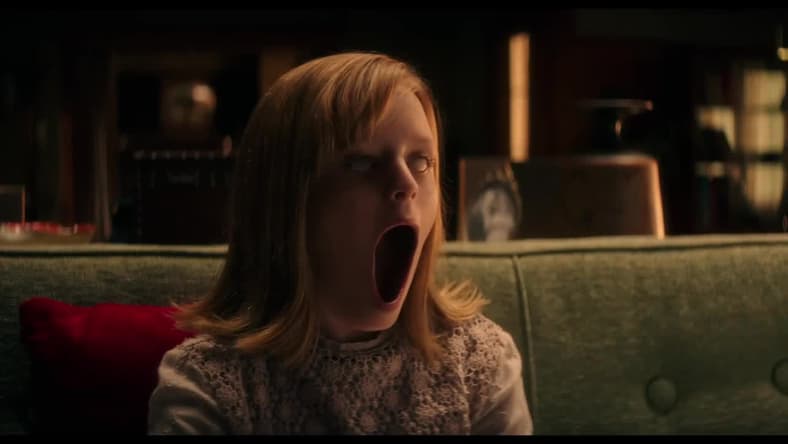
A prequel to the mediocre Ouija (2014), Origin of Evil takes us to 1967 Los Angeles, where we meet widowed mother, Alice (Elizabeth Reaser). With the help of her girls, Lina (Annalise Basso) and Doris (Lulu Wilson), the three host staged sessions with the spirit world to, as they say, “help” paying customers. But when Doris toys with a Ouija board, she finds herself communicating with the dead for real…leading to terror for the whole family.
The bar may have been low–and I do mean low–but Origin of Evil outdoes the first film in every conceivable way. It’s the rare prequel that’s leagues better than the original. Led by a magnetic Wilson, the whole cast possesses the audience with their performances. Reaser, Wilson, and Henry Thomas (Father Tom) would all go on to work with Flanagan again in his smash hit series, The Haunting of Hill House.
Like Before I Wake and Flanagan’s first two films, Absentia and Oculus, Origin of Evil centers around the loss of a loved one and heavily explores the question of death. What happens to us? Where do we go? Do we go anywhere? Everything the filmmaker has done since then asks the same. The Haunting of Hill House, Doctor Sleep, The Haunting of Bly Manor, and even the non-horror The Life of Chuck, they all challenge our perception of death from different angles. Watching them together, you can almost track how Flanagan has progressed from a more nihilistic view—Origin of Evil ends well for no one—to something a little more on the optimistic side with The Life of Chuck. Origin of Evil wasn’t his first crack at it, but it established many of the director’s themes in a clear-cut way that has continued throughout his work.
And then of course, there’s the simple matter of the scares. Before Origin of Evil, Flanagan was no stranger to unnerving audiences through the supernatural. He’s been doing it since Absentia, which features numerous encounters with ghosts (and a giant bug). But I’d argue Origin of Evil is where the filmmaker’s craft grew to the next level. Look no further than the opening séance scene. Flanagan progresses through the moment with a masterful patience. No stingers of foreboding music distracting the viewer. Just cold, eerie silence, before he suddenly scares the hell out of us. Watching the prequel, it’s an obvious stepping stone to the supernatural horrors that he would tackle next with his groundbreaking series.
2016: The Year of Mike Flanagan

All of us discovered Mike Flanagan at different points. There’s no one film or series that made him the beloved master of horror he is today. But in 2016, Before I Wake, Hush, and Ouija: Origin of Evil marked a significant moment in his career. Together, whether by themes, techniques, cast members, or other tendencies, they previewed the exceptional works that were to come from a filmmaker on the rise.
The rest is history.
Categorized:Editorials