
‘Silent Hill’ Turns 20: Did Critics Get It Wrong?


Sometimes, critics are flat out wrong. One of the most egregious offenses, Christophe Gans’ Silent Hill adaptation holds a paltry 33 percent ratingon Rotten Tomatoes. The critics’ consensus reads: “Silent Hill is visually impressive, but as with many video game adaptations, it’s plagued by inane dialogue, a muddled plot, and an overlong runtime.” Okay, sure, the 125-minute runtime is a little obnoxious, but Gans and cinematographer Dan Laustsen (Frankenstein, The Shape of Water) inject stunningly chilling imagery straight into the veins. The story, written by Roger Avary (Reservoir Dogs, Pulp Fiction) and based on the popular video game series published by Konami, delivers creeping dread and insidious evil with a sharp, glistening pen.
Upon a recent rewatch (the first since I saw it (20 years ago), I was struck by its reliance on tension, mood, and subtle scares that crawled up my backbone. The runtime, in fact, didn’t feel long but exactly what the story demanded. Often, filmmakers pad out their narratives with frivolous scenes that neither flesh out the characters nor advance the story. Silent Hill achieves a pulsating intensity with its high-stakes thematic thread of grief and character-driven development that feels like a natural progression, rather than forced or unwarranted.
Strong performances from Radha Mitchell, Sean Bean, and Laurie Holden bolster an already sturdy script. I was particularly impressed by Mitchell’s delicate and complex layers of a mother torn apart by the disappearance of her daughter, Sharon (Jodelle Ferland). When Sharon begins dangerously sleepwalking out into the woods, it becomes clear that something truly horrifying is happening. The incident’s outward ripples create an emotional disconnect between Rose (Mitchell) and her husband Christopher (Bean). Rose becomes laser-focused on finding answers about Silent Hill, a secluded and abandoned town in West Virginia that Sharon has been uttering during these sleepful happenings, and she plots a mission to the derelict community without telling Christopher.
The hazy mist that blankets the long stretches of highway leading into Silent Hill descends upon Rose as though a ghost just steps out of view. The heightened sense of tragedy and mystery blankets the story. Avary connects visual motifs with the propulsive energy barreling at the viewer’s eyeballs at 100 mph. There’s no missing these tendons that operate to fuel the sheer terror that seeps out from every corner of the frame.
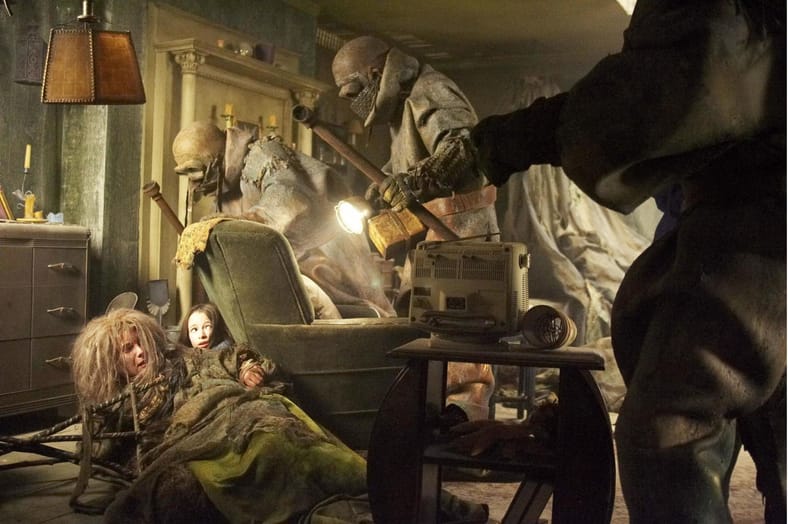
After an encounter with motorcycle police officer Cybil Bennett (Holden), who nips Rose’s heels as she winds closer to town, a woman steps out into the road and causes Rose to crash. When she awakens, she finds her daughter missing. What began as a quest for answers quickly veers into a quest for Sharon. Much like the suffocating brainfog Rose experiences in her grief, Silent Hill grows increasingly suffocating, even strangling the audience. The trek through desolate streets and blaringly eerie, looming buildings sometimes feels like a video game, but most times, Gans blends styles into an immersive and terrifying cinematic experience. Images flash on the screen or subtly peek through the darkness. Jump scares are rare, and Silent Hill doesn’t get nearly enough credit for leaning primarily into chilling the blood and rattling you awake.
In case, for whatever reason, you haven’t seen 2006’s Silent Hill, I won’t dive into spoiler-y waters. Over two hours, screenwriter Roger Avary and director Christophe Gans manage to create a rollercoaster of tricks and treats that remains one of the best of the 2000s. In a muddled sea of torture porn, remakes, and the Paranormal Activity wave, the film often gets buried when assessing the modern era. Video game adaptations are hit or miss, but Silent Hill sits comfortably next to the likes of Werewolves Within, Detention, and Resident Evil, among many more, that work.
Even though critics seemed to loathe the film (and some still do), Silent Hill should be commended for holding up decades later. It’s nightmare-inducing, wonderfully frightening, and, most importantly, a damn good time. With fresh eyes and a willingness to go along for the ride, you just might see what I see.
Categorized:Editorials